Posts mit dem Label Echinopsis Cuzcoensis werden angezeigt. Alle Posts anzeigen

Montag, 27. April 2015

Trichocereus Cuzcoensis - Echinopsis Cuzcoensis

Trichocereus Cuzcoensis – Echinopsis Cuzcoensis

Current name: Echinopsis Cuzcoensis

Trichocereus cuzcoensis is now called Echinopsis Cuzcoensis under the new taxonomy. That means that it is an accepted species, despite it´s obvious similarity to Trichocereus Peruvianus. There are countless intermediates between Trichocereus Peruvianus and Trichocereus Cuzcoensis and there are many regional types, especially where both grow together, that show traits of both species.  As an example, there are Peruvianoid forms of Trichocereus Cuzcoensis and there are specimens of Trichocereus Peruvianus that show some traits of Trichocereus Cuzcoensis. Personally, I think that Trichocereus Cuzcoensis and Trichocereus Peruvianus are so similar that it is not really reasonable to keep them divided. So far, i´ve seen at least 50-60 regional forms of Trichocereus Cuzcoensis and where ever they grow in neighborhood of Trichocereus Peruvianus, they hybridise with each other and form so called transitional forms. The whole group around Trichocereus Peruvianus is extremely variable and that also includes Trichocereus Cuzcoensis. Please note that Trichocereus cuzcoensis is MORE than just KK242, what has become THE textbook definition of a Trichocereus Cuzcoensis. And the hate surrounding the KK242 gave the whole group a bad rep and that´s absolutely not justified. There are countless varieties that come from the complex around Trichocereus Cuzcoensis and I will use this page this show you all the faces that Trichocereus Cuzcoensis can have. Because there are countless Trichocereus Cuzcoensis types, I´d like to ask you to submit me pics of your Cuzcoensis plants so we can get a better overview about what´s out there. I will publish every submitted photo, so if you have some for this page, send me a message on facebook or through the contact page.

Description: Echinopsis Cuzcoensis (Britton & Rose)

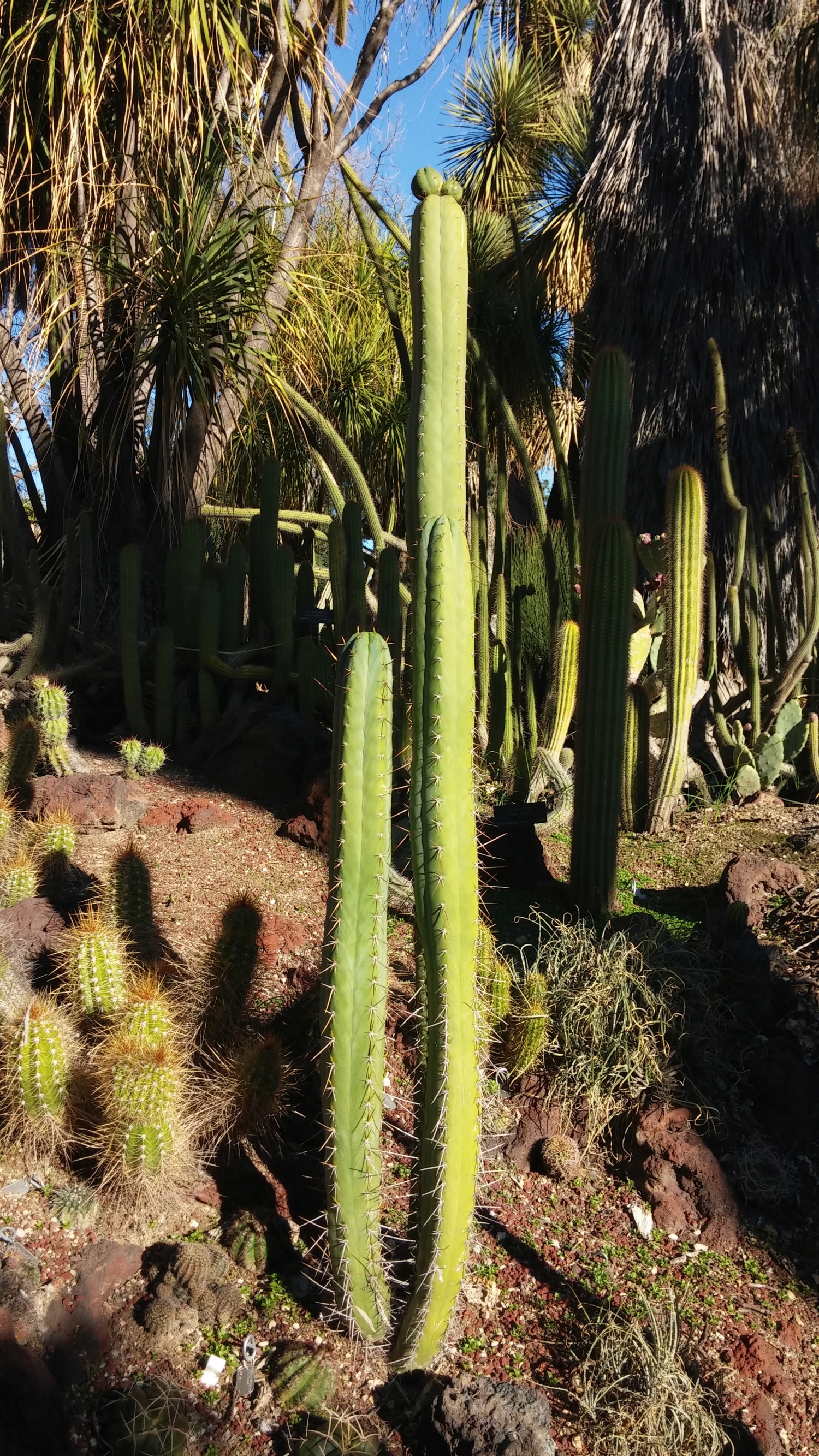
Trichocereus Cuzcoensis is a columnar cactus that grows like a tree and pups from the base. It can get more than five meters tall, though most collection plants that are grown in pots do not exceed 2 meters. However, in countries like Australia, there are many huge plants of Trichocereus Cuzcoensis to be found. New growth has a bright green color. It can get between 5 and 8 rounded Ribs and the areoles are approximately 1-2 centimeters apart from each other. Trichocereus Cuzcoensis has many, very strong spines. The number of spines is very variable but in most cases, I observed between 8-12 spines. The spines usually have a rounded, knobby base. New spine growth is yellow or dark brown while old spine growth is usually dark gray to white with slight black undertones or black spine tips. The spines usually are between 5-10 centimeters long.

Trichocereus Cuzcoensis is a night-flowering species but the flowers usually stay fresh until the morning of the next day. Trichocereus Cuzcoensis is self-sterile. That means that you need another specimen as pollen donor in order to produce seed.

Flower: The flower color is white and the flower is usually very large. It measures up to 16 centimeters, the tube is green and 7-8 centimeters long. Petals are approximately 5 centimeters long and there are hairs covering the flower.

Typus Location: Peru, Cuzco

Synonyms & Varieties: Trichocereus Knuthianus, Trichocereus Crassiarboreus, Cereus cuzcoensis, KK242, KK340, KK1911 Knuthianus,

Cultivation: Trichocereus Cuzcoensis is grown just like other Trichocereus species. It´s a very tough and frost hardy species and is able to cope with temperatures down to -9° celsius/15.8° Fahrenheit for short periods of time. The minimum average temperature is 10° celsius/50° fahrenheit. That temperature is also the minimum temperature that it needs to stay healthy during the winter.

Winter protection: Trichocereus Cuzcoensis can be overwintered in a bright and well ventilated place. The temperature should be around 9-10° celsius and the plants need to be completely dry. In european countries, the growers stop giving water and fertilizer in late summer (September or October) and take em in until early May or April. Keeping the plants dry and cold over winter also helps to increase flower production. Plants that are kept in a warm room over the winter lose their ability to flower. Besides, plants or seedlings need to be watered on a regular basis as soon as you have them in a heated room. If you want to overwinter a Trichocereus in a warm room (20°-30° celsius), you have to water it on a regular basis. You can only overwinter a plant “dry” if the temperatures are low.

Growing Trichocereus Cuzcoensis from seed: Trichocereus Cuzcoensis is very easy from seed, because it is relatively resistant to most pests. One of the biggest challenges is to get good quality seed because most Cuzcoensis seed on the market is pretty old and some do not even germinate. I am constantly looking for interesting new types of Trichocereus cuzcoensis, because they are amazing plants. Take a look at the pics from the Sacred Succulents Field Trips that are labeled “Cuzcoensis” and you will most likely agree. Germination temperature for Trichocereus Cuzcoensis is between 26° and 30° celsius. It only needs very little water to induce germinations and if you have quality seed, they will germinate within 2-6 weeks. If nothing shows up by the 6th week, you will probably not get germinations at all. In this case, remove the lid, let the soil dry out and start with the germination process again. Those cycles mimic the way this actually happens in nature and sometimes, you will be able to re-activate dead seed. You can also add GA-3, which is Gibberellic Acid or use a strong HPS or LED lamp to wake the seeds up, because ultraviolet light increases germination rates. In general, Trichocereus seeds need light to germinate, so dont cover them with soil.

Trichocereus Cuzcoensis Seed Sources: I will use this segment of my text to add good quality seed sources for Trichocereus Cuzcoensis but right now, I do not know any supplier that can provide viable seed. Köhres used to have them but right now, they are not available anymore. I know of one Peruvian Seed-Wholesaler that occasionally has some, but they are usually crap because in most cases, they will not be viable anymore.

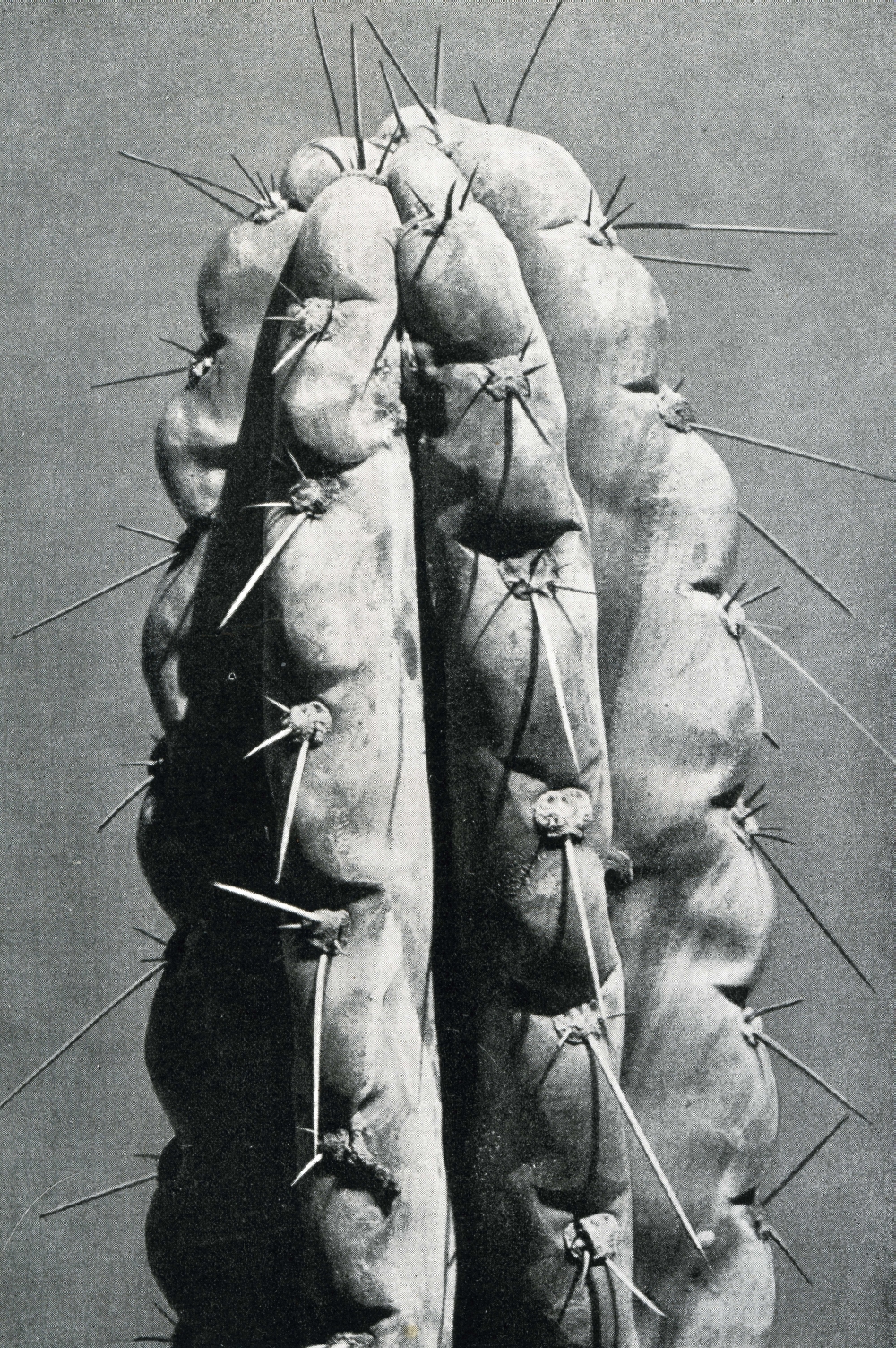
Trichocereus Cuzcoensis KK242 Master EvanThis looks like a very typical Trichocereus Cuzcoensis KK242. This type was originally brought into cultivation by Karel Knize. He also sold various types of similar plants labeled as Trichocereus Cuzcoensis, Trichocereus Macrogonus or Trichocereus Peruvianus. The label KK242 does not refer to a particular plant but the area where the seeds/cuttings were collected at. Because of that, there are many plants labeled KK242 which are NOT a Trichocereus Cuzcoensis. The type just looks so unique and remarkable that it stuck and most plants that look like this are usually identified as KK242. Which is not really correct because that´s just one of the many types that grow within the KK242 range. However, most of the KK242 are in fact Trichocereus Cuzcoensis. Pic: Master Evan

TravelerAnother KK242

Trichocereus Cuzcoensis 74_a

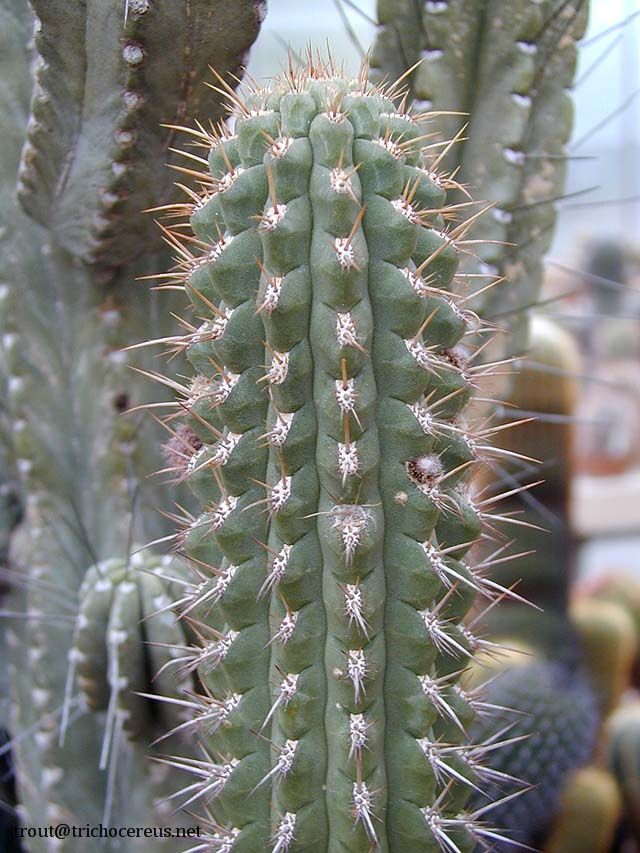
Copyright: K.Trout – This probably shows the Knuthianus variety.
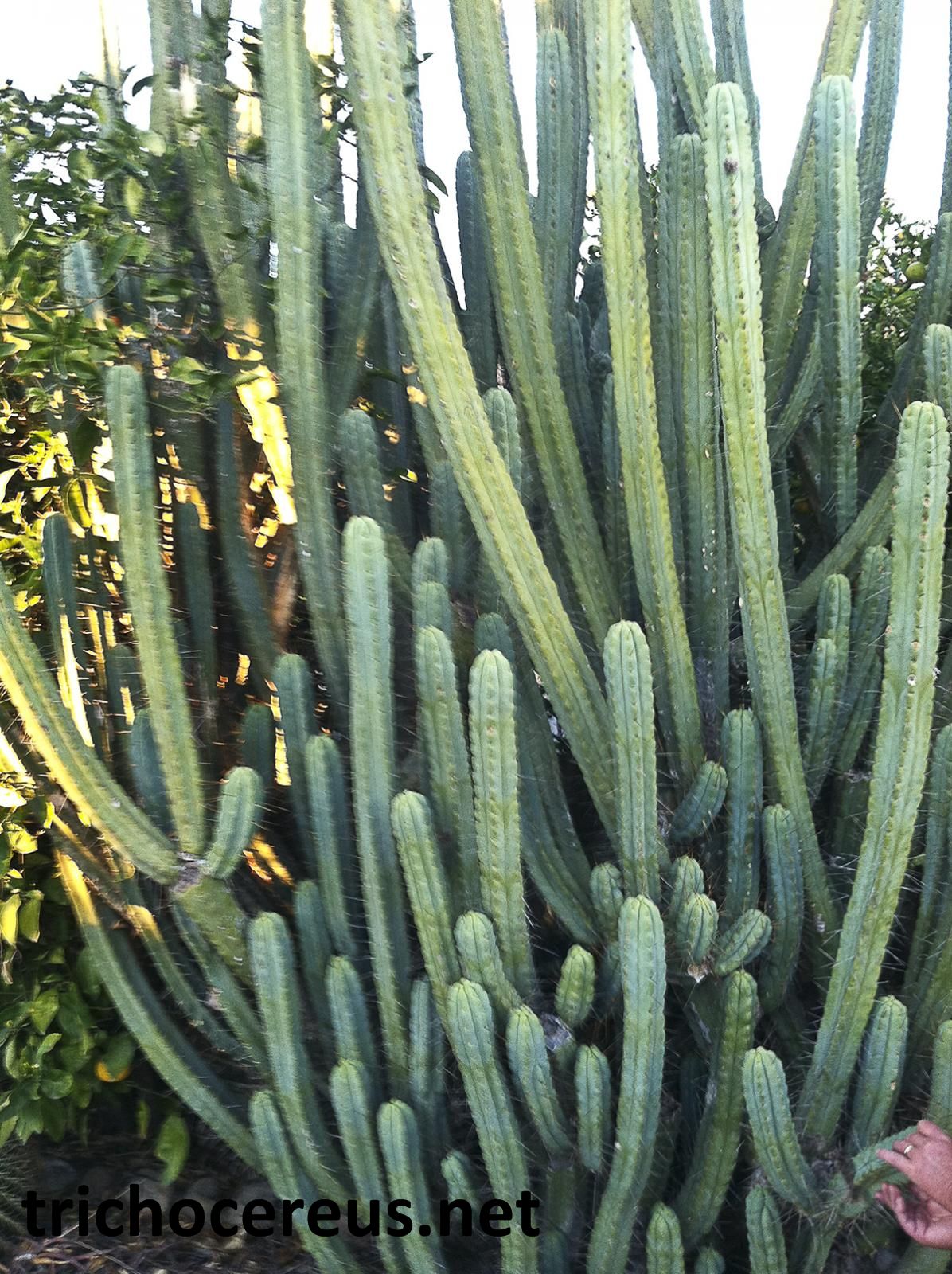
trichocereus cuzcoensis trichocereus_net

A large mother plant. Potentially the Tarmaensis Variety of Cuzcoensis
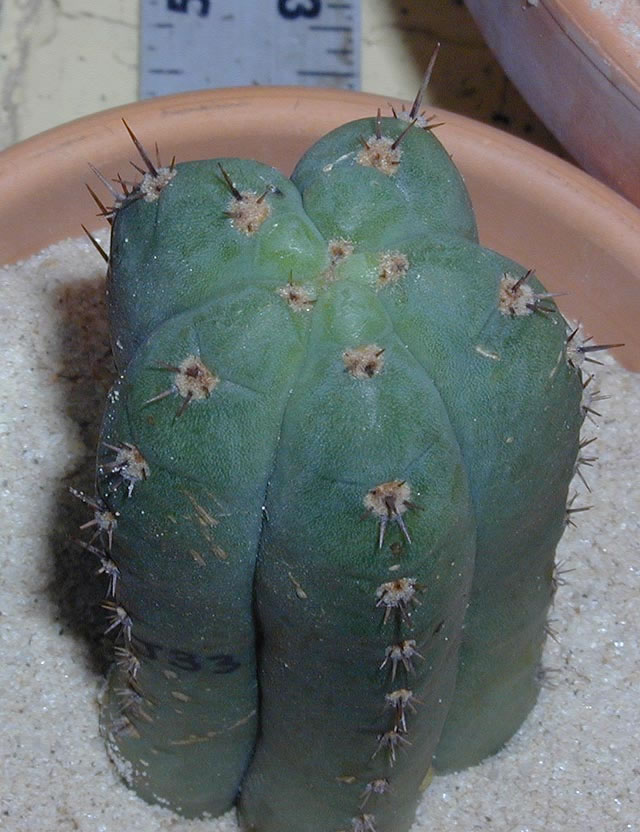
Trichocereus Cuzcoensis KK242 Rio Lurin_J33_2_jpg

One of the many faces of KK242. Copyright K.Trout
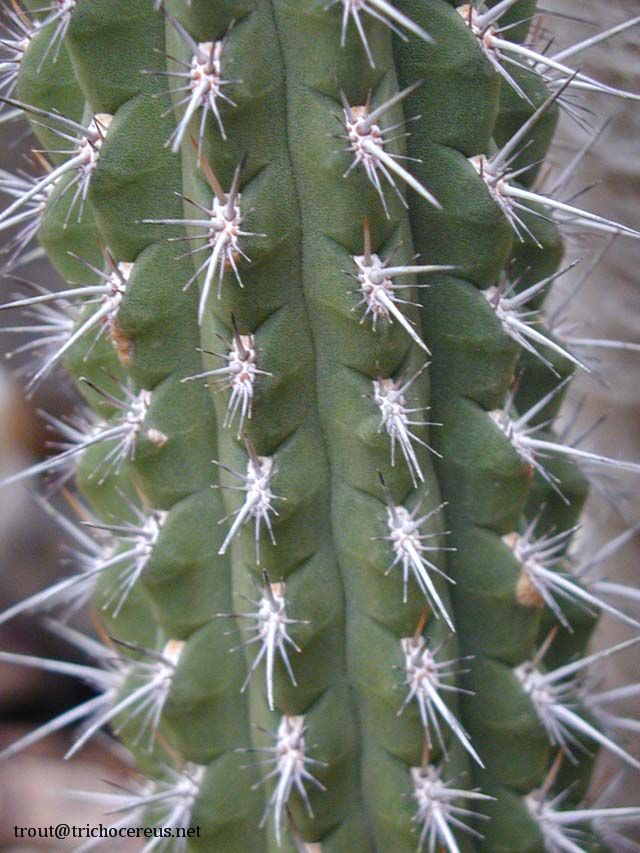
Trichocereus Cuzcoensis _c

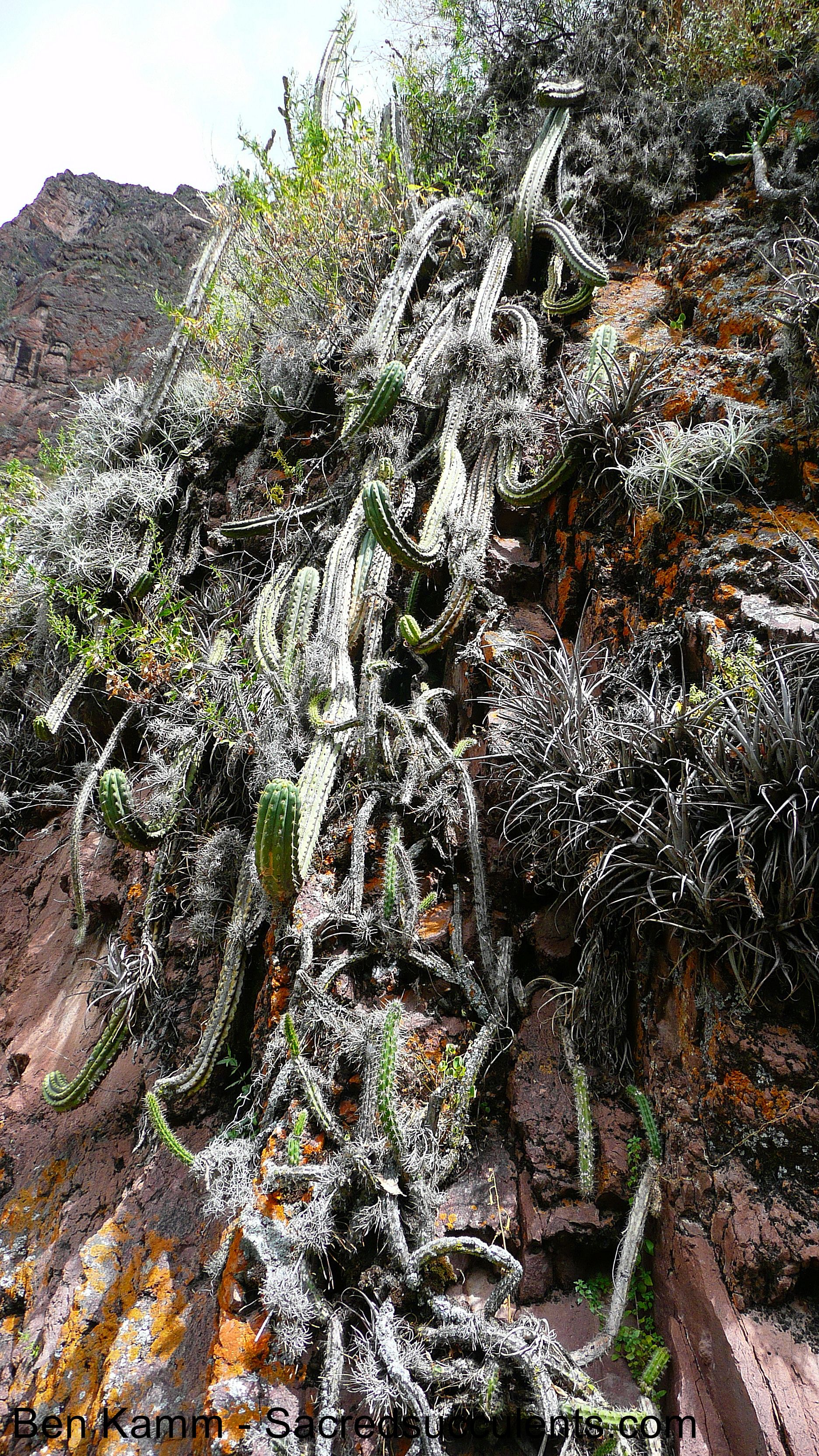
3 Trichocereus cuzcoensis, Lamay, Cusco, Peru 2010 copyright B

Copyright: Ben Kamm, Sacred Succulents
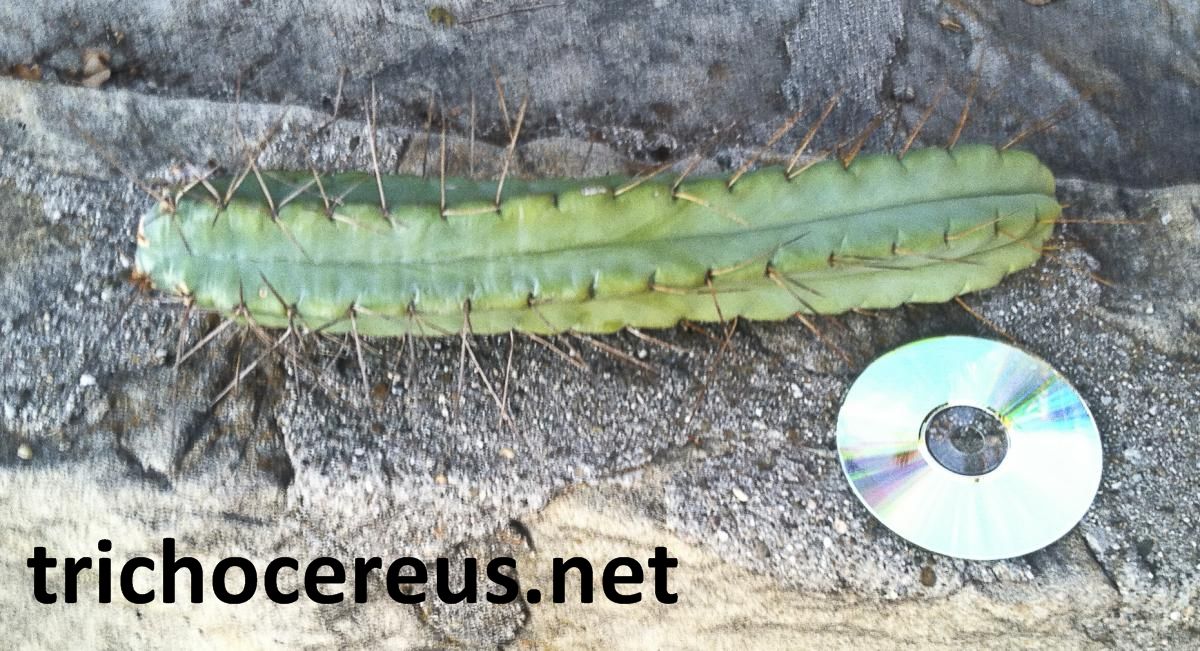
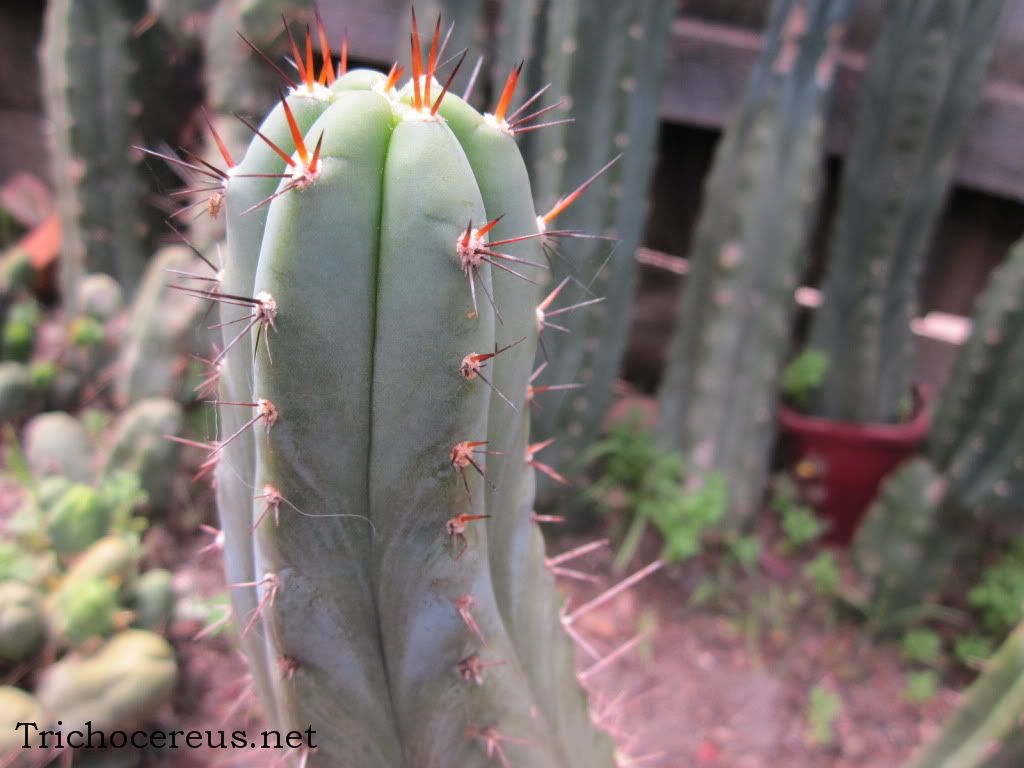
trichocereus cuzcoensis trichocereus_net 2


Trichocereus Cuzcoensis - Echinopsis Cuzcoensis

Trichocereus Santaensis

Trichocereus Santaensis


Trichocereus Santaensis is probably some kind of Trichocereu Peruvianus Variety with reddish Spines. Please note that the Descriptions we add here are just the Opinions of the Authors. Backeberg tried to name the Plant with his Friend Rauh and thought that Santaensis deserves to have the Rang of a Species and was the Opinion that is is different enough from TRICHOCEREUS PERUVIANUS, TRICHOCEREUS MACROGONUS and TRICHOCEREUS PACHANOI.


Origin: Northern Peru, the valley around the Rio Santa, Puente, Bedoya, Huayanca


Can be kept apart from Trichocereus Cuzcoensis by the lack of a base on the spines. It´s also more frosted blue, has less spines and shorter middle spines. Unlike Trichocereus Peruvianus, it grows always upwards and does not bend over. Please note that Trichocereus Santaensis is a Variety of Trichocereus Peruvianus. The cactus botanists were arguing about this species and the pics I have show different kinds of plants.


trichocereus santaensisTrichocereus Santaensis – Huntington Botanical Garden – by Richard Hipp!


Description: Trichocereus santaensis Rauh & backb g -. Descr. Cact. Nov. 20, 1956


Trichocereus Santaensis can get up to five meters high and branches from the bottom. The stemps are blue-green to a glaucous green. It has 7-9 ribs that are similarly broad than the ones on Trichocereus Knuthianus aka Echinopsis Knuthiana. There is a distinct furrow above the areoles. This distinct V-Notch is very strong in young pups. The areoles have a diameter of approximately 1 centimeter and Trichocereus Santaensis has between 1-3 radial spines. Spines medium long to short. In addition, Trichocereus Santaensis has one very long middle spine, which is up to 5 centimeters long.


Flower: The flower is white and gets up to 22 centimeters in length. It has a similar flower than other San Pedro types, which is another indicator that Trichocereus Santaensis is probably just a variety of Trichocereus Peruvianus, Trichocereus Cuzcoensis or Trichocereus Macrogonus. The flower tube dark gray to brown hairs.


Origin/Habitat: Rio Santa, Puente, Huayacana, Bedoya.


Trichocereus Santaensis is said to be very similar to Trichocereus Cuzcoensis, but does NOT have rounded, knobby spine bases. Besides, the spination is less strong and grows always columnar instead of creeping. Today, it would be regarded as a Variety and not a species. Differences like slightly different spination do not justify describing it as a separate species.


Please note that there are some types of Trichocereus Santaensis that have red spines. Because of that, it´s a very sought after plant.


trichocereus santaensis


In the Chapter of TRICHOCEREUS PERVIANUS, Backeberg wrote about its growth type:


I even found the Type initially growing erect, then lying or hanging . But near Matucana, there also are upright growing Varities of Trichocereus Santaensis, which probably weren´t recognized as a seperate Species.


The identification of these species with Tr. macrogonus (KKDE., 20, 1941) i cannot agree with.


 trichocereus santaensis backeberg reduced


This is Backebergs Key for Trichocereus Santaensis


Branches to 10 cm

Blue green shoots

Ribs 7, very broad, strongly furroved,

Not flattened furrows

Spines gray-brown, brighter towards the base

Middle spines:

1 spine is longer, spines up to 4 cm long


  1.  Friedrich Ritters Description was:

    Trichocereus SANTAENSIS RAUH & BACKBG. 1956 RAUH: BEITRÄGE PERUANISCHER KAKTEENVEGETATION

    1958, s. 361

    Differences from TR. Pachanoi (data for the latter in parentheses):


    Body gray-green (grass green to bluish green). Ri. 6-7, usually 6 (5-8, in


    Peru medium to 10 and even higher), on the Areoles a slight v-shaped


    Notch (little cross notch). Ar. 3-5 mm Dm


    Spines: few or absent,Rsp. to 3, a few mm to 3 cm long,


    Middle Spines. usually one, often it is the only Spine, a few mm to 4 cm long.


    Flower. Near the apex, about 18-19 cm long, about 12 cm wide open (up to 20 cm wide between the

    outer petals), obliquely upward (about protruding horizontally), just


    (with two slight curves). Nectar Chamber 19 mm long (slightly longer), without

    significant gap (small space), with little or no


    Nectar (with some nectar). Tube about ca 6 cm long with 2.5 cm further


    Opening (longer and wider). Petals slightly shorter and narrower, the outer

    almost adjacent to the interior Ones (strongly bent outwards),


    SANTA Valley at 2000 m and about Depart. Ancash; only here. No. FR 567a.


    Fig. 1,188,


Santaensis


Trichocereus Santaensis

Trichocereus Puquiensis / Echinopsis puquiensis

Trichocereus Puquiensis / Echinopsis puquiensis

There is very little Information available about Trichocereus puquiensis. The Name comes from Rauh & Backeberg and was described as Trichocereus puquiensis Rauh et Backeberg nov. spec.

This is an older version of an article from our Trichocereus database. Check out the full version with photos: https://trichocereus.net/trichocereus-puquiensis-echinopsis-puquiensis-puquio

The plant is certainly not an accepted species anymore, but I will give a clear overview what this type looks like.

Trichocereus puquiensis gets up to 4 meters tall, but most plants are around 2 meters. It pups from the base and grows as columnar shoots, growing upwards. The plant is extremely close to Trichocereus cuzcoensis and I regard it as a variety of Trichocereus cuzcoensis. The color of the epidermis is blue/green. It has 8-10 ribs and reaches a maximum diameter of 10-20 centimeters. The ribs are between 1-2 centimeters high, areoles are 1-2 centimeter in diameter and felted, similar to the areoles on Trichocereus cuzcoensis. Trichocereus puquiensis has 10-12 radial spines that are up to 2,5 centimeters long. New spine growth of the radial spines is brown. It also has 1-2 long middle spines, of which one or two are pointing upwards. Those middle spines are 8-12 centimeters long. New spine growth is brown and old spine growth is gray, exactly like it is on Cuzcoensis.

Flowers: The flowers are 15-22 centimeters large and white. A typical San Pedro flower. The tube is up to 2,5 centimeters thick and hairy.

Fruit: Unkown. Probably similar to Cuzcoensis fruits.


Habitat: Puquio, Department Ayacucho and it only occurs there. It grows in neighborhood of Erdisia Quadringularis. Rauh assigned the collection number K119.

This is Rauh´s original, latin description, which slightly differs from mine.

Planta 3-4 m alta, a basi ramosa; caules columniformes glauci, 8-10 costati usque 15 cm crassi: costae angustae, ca- 1,5 cm altae; areolae 1cm in dia. lutei-brunnescenti-tomentosae, aculeis marginalibus ca. 10 usque 2cm longis, in calulibus hornis brunneis;aculei centrales plerumque 2, quorum superior oblique erectus vel transverse patents, usque 10 cm longus, basalis oblique deflexus 5-8 cm longus, in caule hornio badius, senectute canus; flores usque 15 cm longi, tubus floralis etiam in statu ante efflorationem rectus, usque 2cm crassus, squamis bractaeneis dense obtectus, quarum pars libera late trigona, in apicem obscurum excurrens, in axillis earum pili lanei brunneo-atri; phylla perigonii exteriora subtus basi rubiginosa, supra virescentia, interiora alba, filamenta, stylus et stigmata virescentia, radii stigmatis 19, ca. 5mm longi, cavum ovarii ferequadrangulare, 0,7cm in dia., nectarium 1,5 cm. longum, angustissimum, stylo crasso fere omnino expletum; fructus ignoti.

Friedrich Ritter sold Seed labeled as FR 155b. Ritter said that the Species would rather resemble Trichocereus Pachanoi than Trichocereus Cuzcoensis. Only limited to the pacific Part of the Andes while Cuzcoensis would grow on the Atlantian Part of the Andes. However, the plant is so similar to Trichocereus Cuzcoensis that I disagree with him on this one. He knew plants better than everyone else, but during that time, many regional varieties were described as species, which is no longer accepted in taxonomy because the taxonomists understood that many of those plants are simply extremely variable and form regional varieties and forms all the time.

Karel Knize sold Seed & Plants under that Name too. The plant is extremely similar to Trichocereus Cuzcoensis but has a couple more ribs than a standard Cuzcoensis. In case of multi-ribbed plants, Trichocereus Puquiensis should be a considered option. It also does not have rounded spine basis, which is typical for Trichocereus Cuzcoensis.

The plant is becoming more and more common because Karel Knize sold large amounts of seed and plants in the past years.

Cultivation: There is very few information about Trichocereus puquiensis available. It should be grown like a standard Cuzco because it´s general growth type is similar to that. It can tolerate frost but temperatures should´nt be lower than -5° to -10° celsius. Plants should be kept totally dry over winter.

Seed & live cuttings sources: There are no known sources for this plant than Karel Knize. And almost all seed I ever got from him was low quality. Besides, I paid him 500 bucks and didnt get anything in return. So yeah, might be a good idea to buy from someone else.

I think that SAB has the plant but right now, it is not in stock. But yeah, they must have had some botanical super powers because they were able to germinate some of Knize´s seed and next time they have it in stock, I´d suggest you to get it because the plant is not very common.


In our Trichocereus group, we sometimes post photos of Tr.puquiensis: https://facebook.com/groups/trichocereus


Trichocereus Puquiensis