Posts mit dem Label Flower werden angezeigt. Alle Posts anzeigen

Donnerstag, 31. März 2016

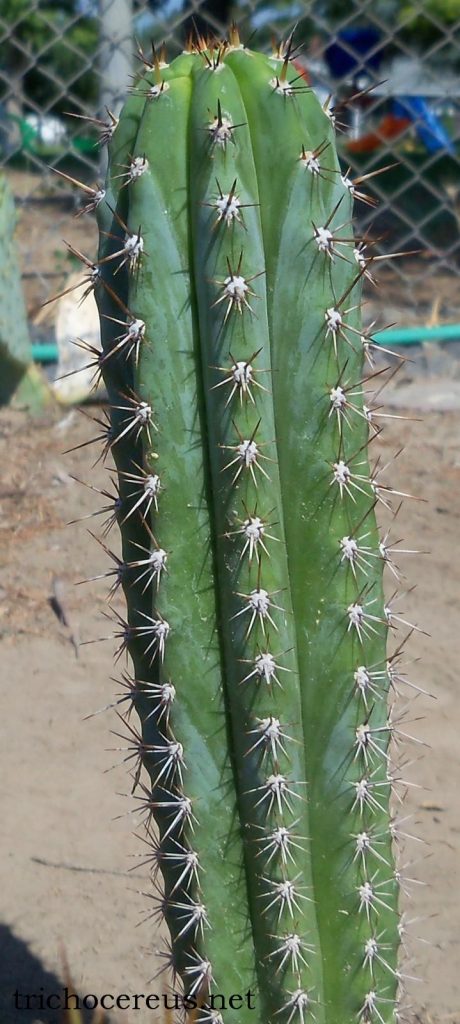
Trichocereus pallarensis

Trichocereus pallarensis


T. pallarensis Trichonest 3Photo: Cactusaffinity.com


Trichocereus pallarensis is a species that was described by Friedrich Ritter and listed in his WINTER catalogs starting in 1961! I do have most of the old Winter catalogs, but I unfortunately not the ones after 1960. But that´s not a problem as I have a whole lot of other information about Trichocereus pallarensis.


Ritter wrote about this species numerous times. He basically called this plant a „variety of Trichocereus pachanoi“, but described it as a new species just in case. Back then, it was common that botanists or taxonomists wrote new descriptions only based on minor differences, that would only be seen as a regional form by today´s standards.


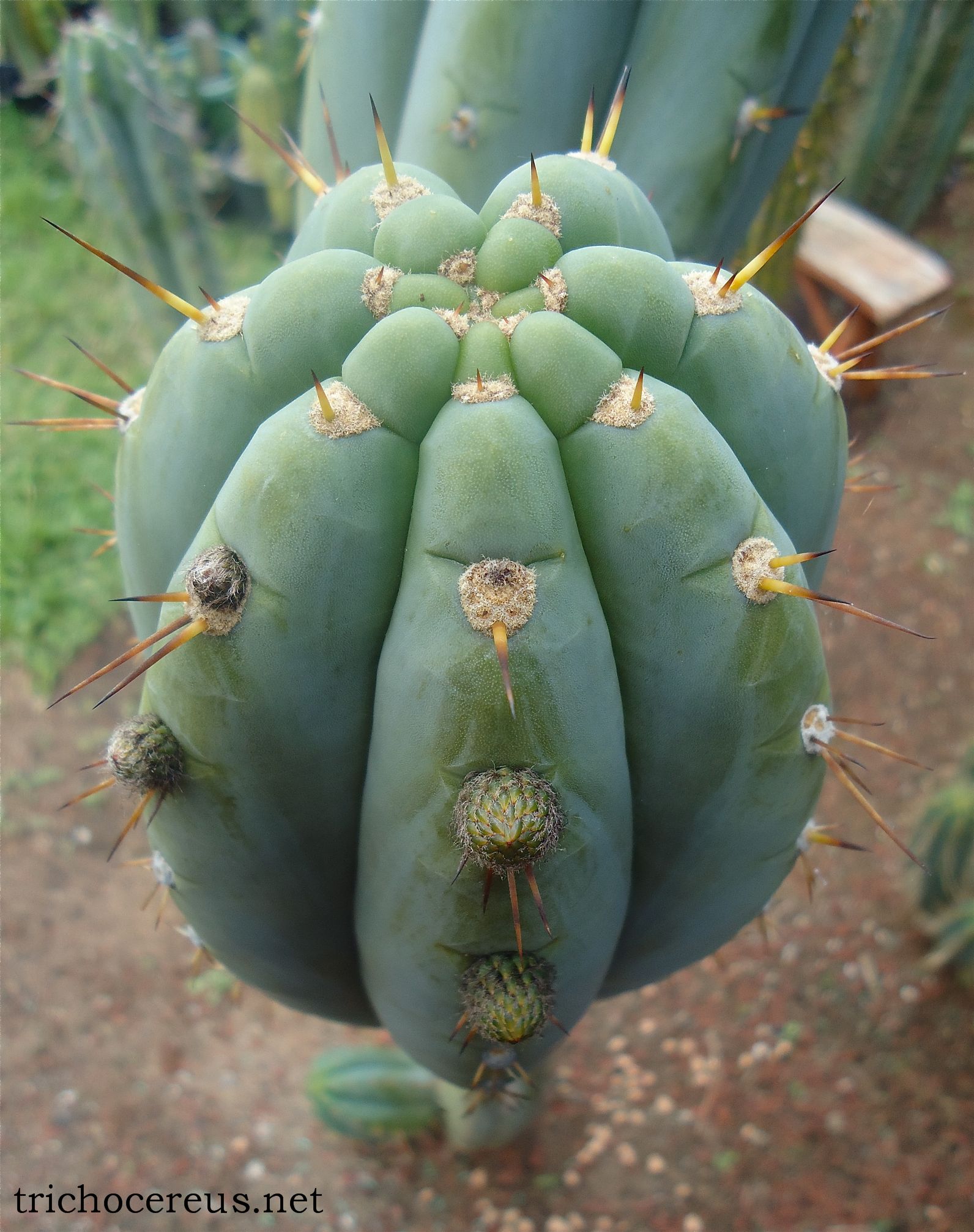
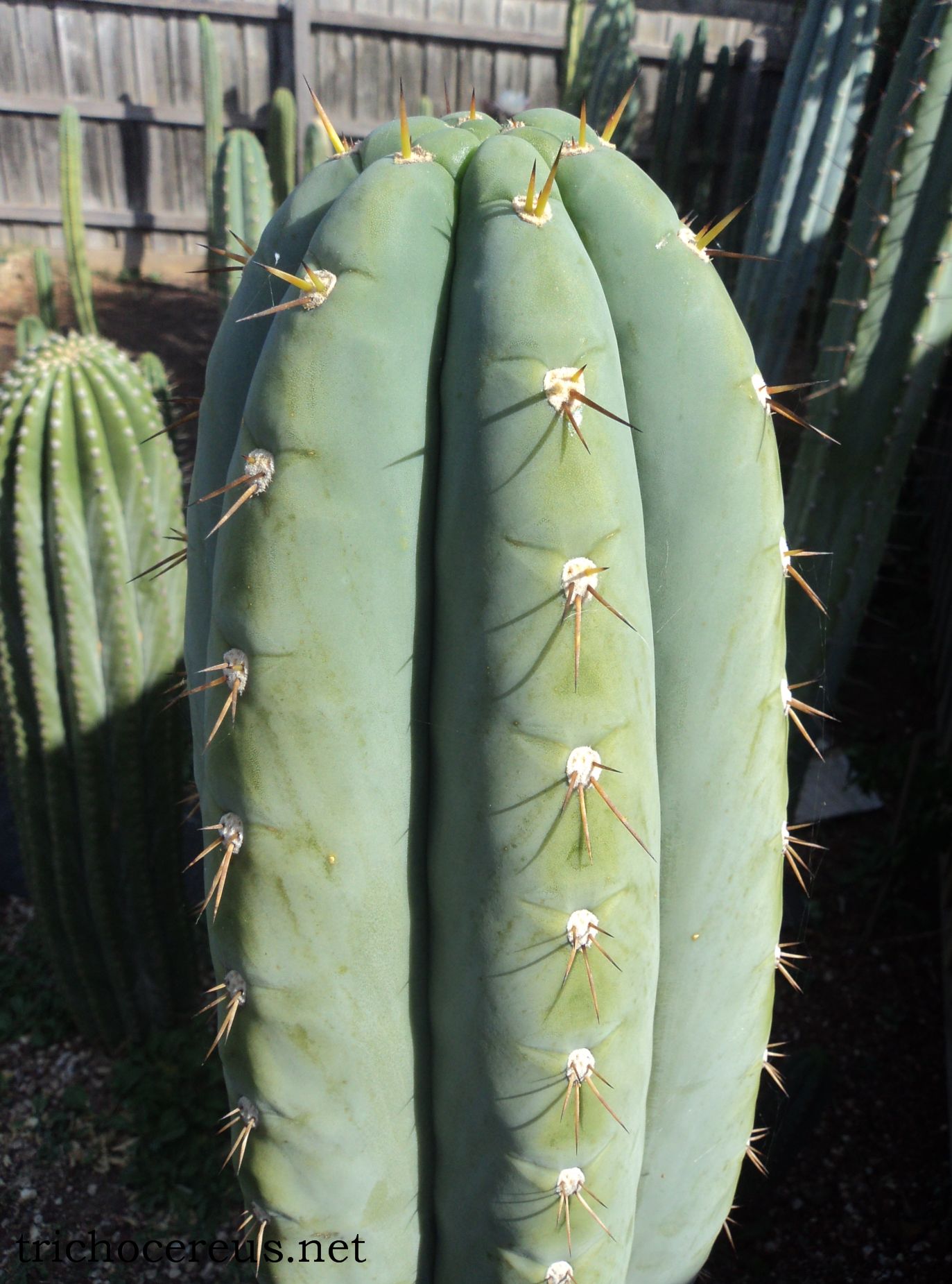
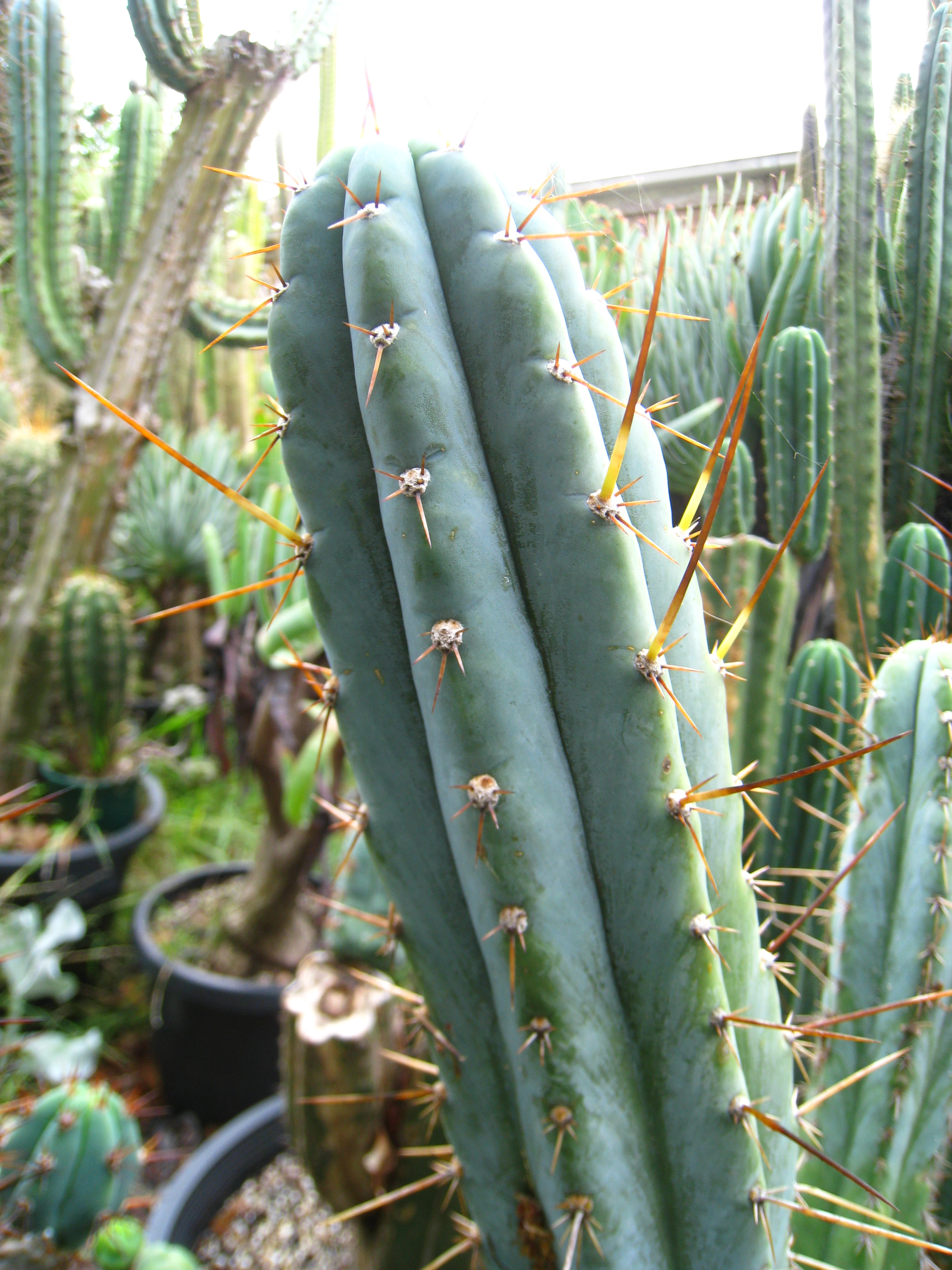
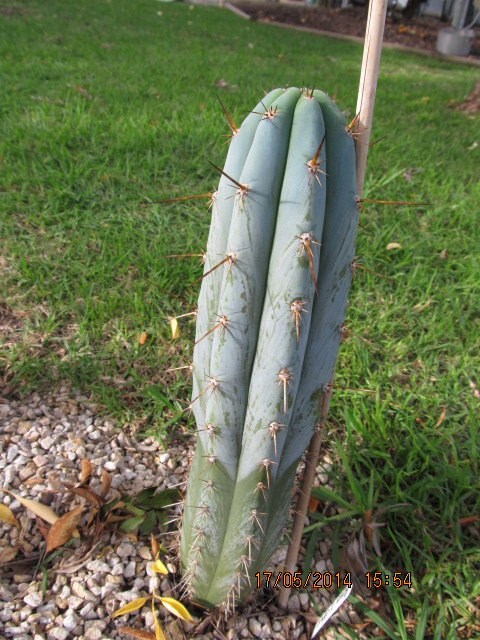
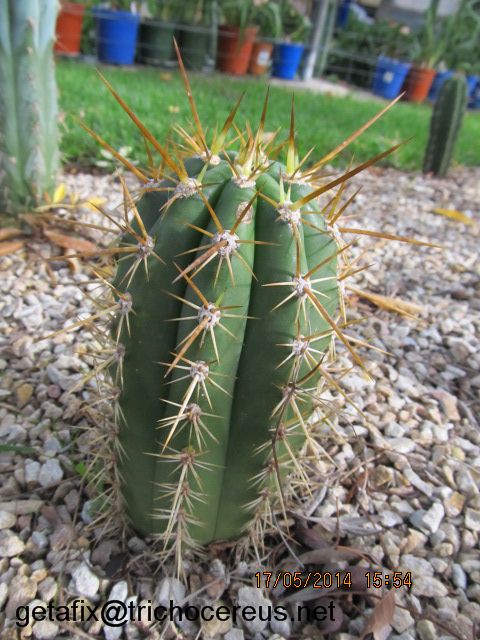
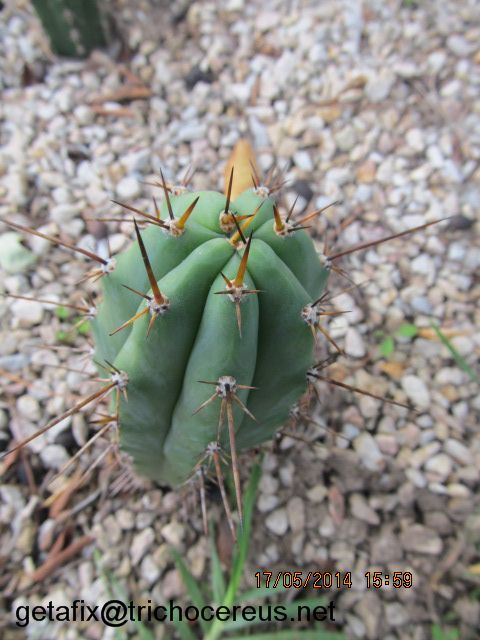
Trichocereus pallarensis has 3 – 6 radial spines (15 – 50 mm long). Those are brown or honey colored and relatively thin compared with the ones on Trichocereus peruvianus and Trichocereus pachanoi. The middle spines are often missing or there is only one very strong and long middle spine. It is very similar to Tr. pachanoi in regards to the spination and most of the spines are only few millimeters long. The areoles are often very small and those packed areoles usually tend to miss the one middle spine as well.


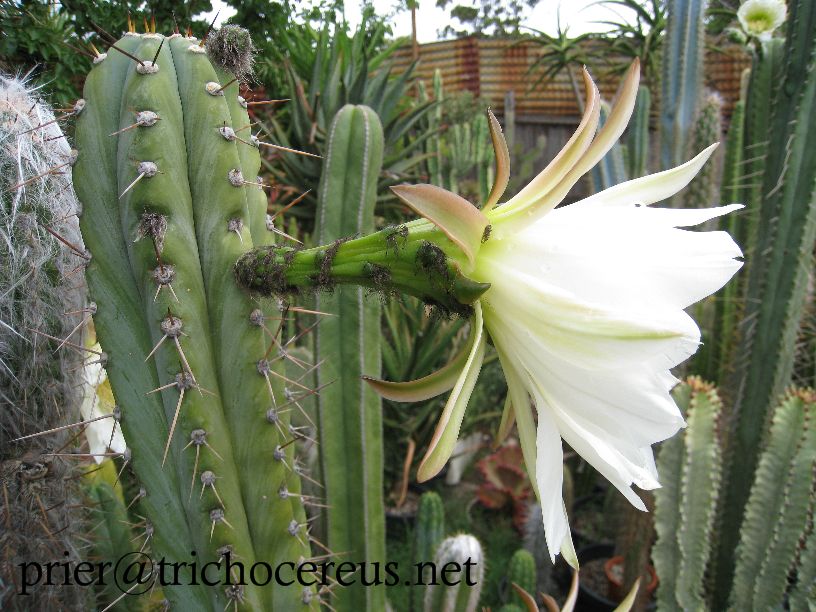
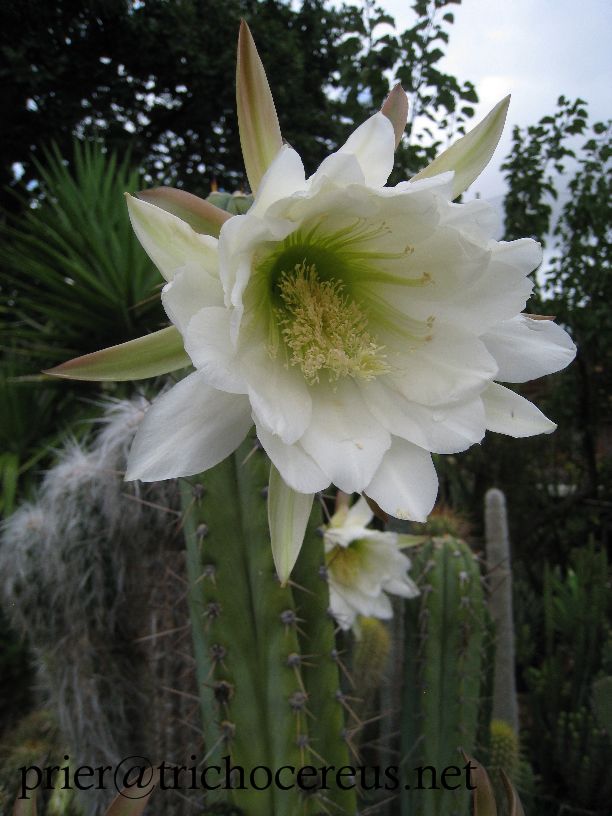
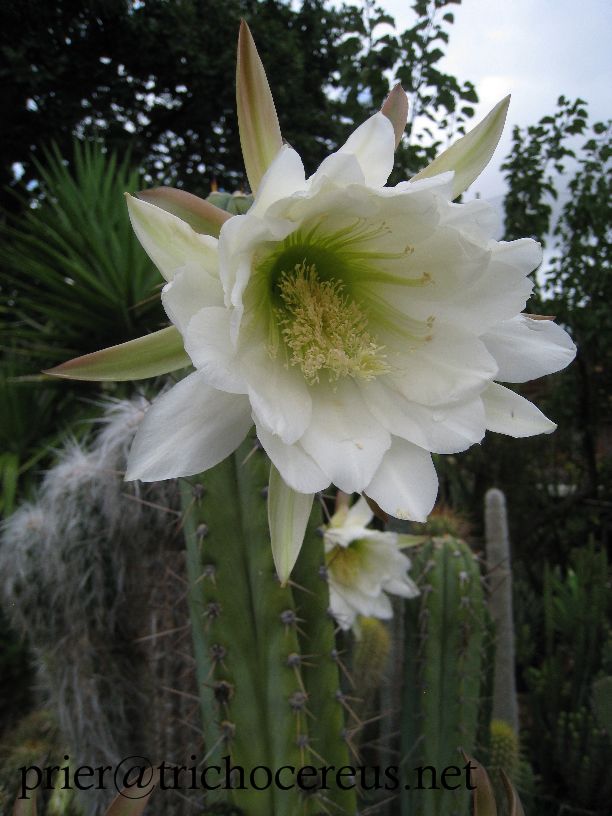
Flowers: Friedrich Ritter was not able to get a good description of the flower and I am working on one myself. The plant is very rare and if you happen to have a flowering sized one, please let me know so we can improve the flower description. With that said, it comes from the Pachanoi group and is probably almost identical to the one of Tr. pachanoi. The flower is definitely white, but I´d love to measure it some more.


Fruit: The fruit of Trichocereus pallarensis is 5 cm long and 4 cm thick. Covered with GRAY wool.
Seeds: The seeds of Trichocereus pallarensis are identical to the ones on other Tr. pachanoi types.


Origin/ Type locality: Trichocereus pallarensis grows in Llancora, near Cajamarca. Near Pallar (that´s where the name comes from) and east of the cordillera Blanca. Department Ancash at 2.500 – 3.000 meters altitude.


Where to buy Trichocereus pallarensis seeds and plants:


Trichocereus pallarensis is very rare and only a few shops have them in stock. If you want to buy seeds of Trichocereus pallarensis, please join my seed list and I´ll let you know next time I have some. You can also get some fresh seeds from Sacredsucculents.com every now and then. They have a beautiful number of crosses that they produce every year. You might also be able to get some from Cactusaffinity and Misplant.


pallarensis395


Trichocereus pallarensis FR1468 Locality: Machar, Peru (Ritter)


Trichocereus pallarensis

Dienstag, 12. Januar 2016

Trichocereus glaucus - Echinopsis glauca

Trichocereus glaucus – Echinopsis glauca

Trichocereus glaucus, also known as Echinopsis glauca, is a columnar cactus from Peru. 


Trichocereus glaucus is a very interesting plant that is probably synonymous with some creeping varieties of Trichocereus peruvianus.

Origin: Peru ( Southern Peru ), Arequipa (Rio Tambo), Chile

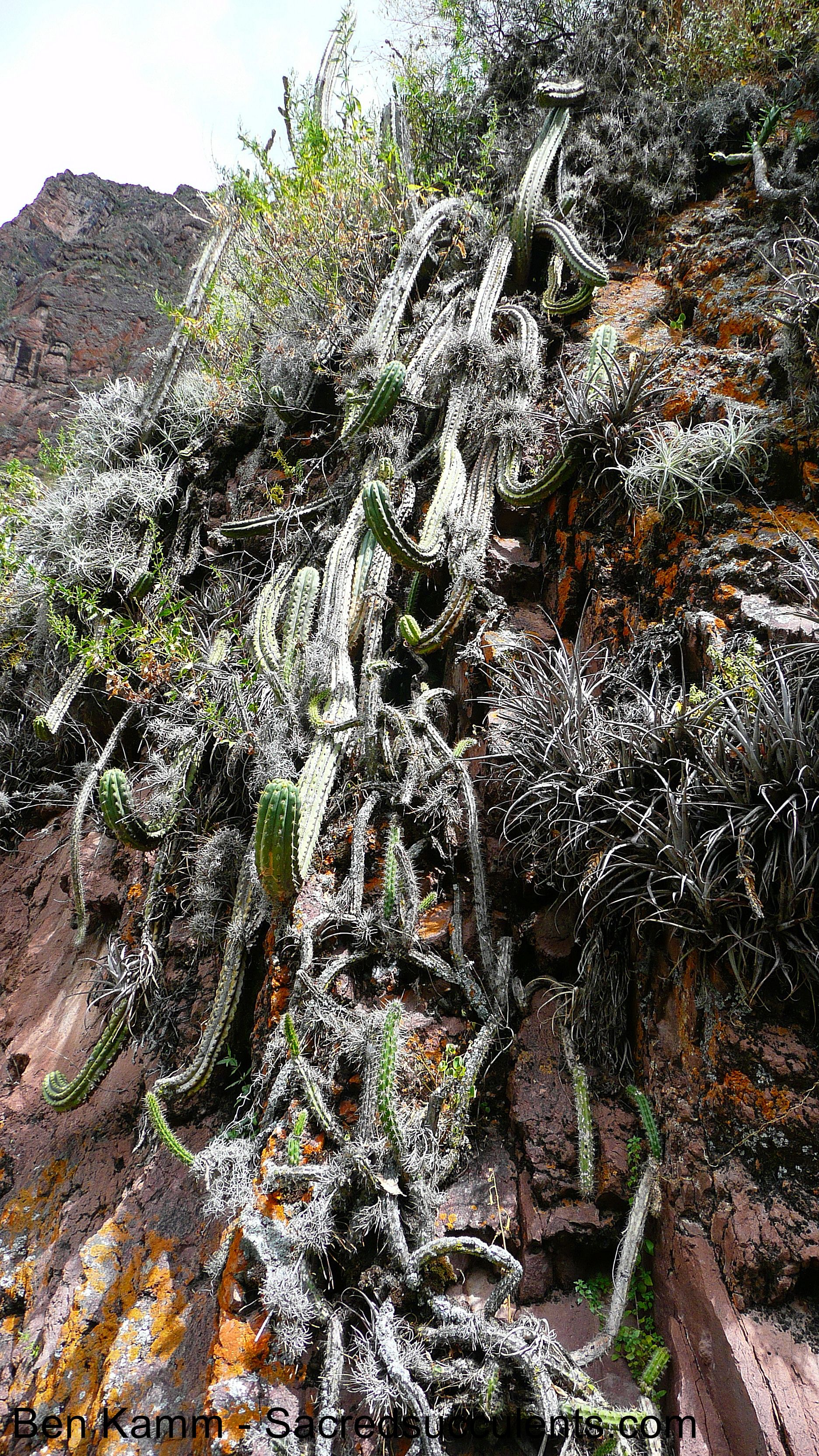
Description: Trichocereus glaucus can get between 1,5-2 meters tall and is a creeping species that you oftenly find hanging down slopes and cliffs. This trait is very distinct in the variety Trichocereus glaucus var. pendens. The color of the skin is very glaucous and small specimens look absolutely like what was originally called Trichocereus macrogonus. However, macrogonus grows upwards while this species tends to bend over with age. New growth is very glaucous and gets even more glaucous later on.

Areoles: The areoles are dark brown to gray and are around 2,5 centimeters apart of each other. Similar to other San Pedro types, the plant has a diameter of up to 10 centimeters and the areoles are gray felted. The spines look a bit like the ones on Trichocereus cuzcoensis and are gray or brown. Trichocereus glaucus has 6-9 ribs, 3-6 middle spines and 8-11 radial spines. The middle spines are 5-10 centimeters and the radial spines 1-2 centimeters long.  New spine growth is black to brown and turn gray with age.

Flowers: White, just like almost every other San Pedro cactus. The diameter is very variable and usually is between 15-22 centimeters. Trichocereus glaucus is a night-flowering species with green, round fruits. But the hairy flowers usually stay open until the next morning.

Fruit: Round, green, and 3 centimeters thick.

Location of the type: Lower part of the Rio Tambo in the department Arequipa.

Trichocereus glaucus is very similar to Trichocereus chalaensis and grows in a similar way. The plant was discovered by botanist Friedrich Ritter and his collection number is FR270. I gave away some seed of this plant a couple years in a row and I am looking forward to post more pics of them in the near future.

Seed & live cutting sources: I gave away seeds of Trichocereus glaucus a couple of years in a row and apart from that, I only know a couple more seed sources. Sacred Succulents has them every now and then & Köhres used to have some in stock too though I am not sure what type they will be. Trichocereus glaucus aka Echinopsis glauca is extremely rare and most plants on the market will probably come labeled as „Trichocereus peruvianus“ or „Trichocereus macrogonus“.

Cultivation: Trichocereus glaucus is a very resilient grower and likes to be watered well in summer. In winter, they should be kept as dry as possible at around 10° Celsius. Seed germinates very well and the plant is usually very tough. That´s also caused by its drought tolerance, which is very typical for Chilean plants. The plant will probably tolerate between -5° to -7° Celsius over very short time, but I would not stress it and this also depends on many other factors, like general health and dryness. I would recommend keeping at no lower than 10° Celsius in winter.

Varieties: Trichocereus glaucus var. pendens. This variety does only grow creeping down cliffs and small hills. This type only grows at one location in Chile and is extremely rare. This local population is in the south of Arica, Camarca in Chile. Backeberg suggested that this would be his Trichocereus Uyumpaensis, which is a creeping type of San Pedro too, but Friedrich Ritter vehemently disagreed with that.

Below: Trichocereus Glaucus – Fotos: Auxin


It forms shrubs with a size of 1 – 2 meters and often several meters in diameter, sprouting mainly from shoots that lay sideways on the ground. This plant rarely pups from the top or upper parts. The shoots are 5 – 8 inches thick, erect, later lying in the lower parts, the new shoot blue-green, later gray-green.

Ribs: 7-9, very broad, obtuse, 7.5 to 13 mm high, 15-25 mm wide, notched, with transverse furrows that do not reach down to the separating grooves of the ribs,

Areoles: grey felted, 1/2-3/4 inches in diameter, 1to 2 inches free removal, let down by the humps in the notches

Spines: In the new shoot black to brown, becoming gray, straight, rigid

Marginal spines: 7-10, directed laterally, the lower and lateral 8 to 15 mm long, coarse needle-shaped, somewhat flattened, the upper the upper stronger and not sharply separated from the Central spines.

Central spines: 3-6, very spread apart, subulate in the middle, but usually closer to the top edge and almost in the position of an edge of spine, below 1.5 mm thick

Flower: Not far from the apex, 13 to 19 centimeters long, fragrant, opening in the evening, the morning still open,

Ovary: Green with fleshy green, narrowly triangular, 2-5 mm long, pointed scales and large scales raised bases. The flowers are covered with brown/black hairs.

Partition against the nectar chamber 3-4 mm thick, tube-shaped, 13 to 23 mm long, to the stylus 1to 2 mm wide, brownish, almost openly, with nectar

Tubes: In addition funnel shaped, 40-65 mm long, the top 2 to 3 cm wide, pale green interior, exterior gray-green, with triangular points, 7.5 to 10 mm long, dark green scales and tufts of hair as on the ovary.

Stamens: white, greenish below, insertions missing on the top 2 to 3 centimeters of the tube to a ring on the hem, pouch pale brown, approximately at half height petals standing

Stylus: pale green, white or pale brownish above, 10 to 11 cm in length, with 14 to 18 mm fall on the 13-16 spread pale yellow stigma lobes, between the pouches or outstanding.


Deutsche Original Beschreibung:

Büsche von 1 meter bis 2 meter höhe und oft mehreren metern Durchmesser, sprossend hauptsächlich unten von liegenden Trieben, weniger oben sprossend. Triebe 5 bis 8 Zentimeter dick, aufrecht, später in den unteren Teilen liegend, im Neutrieb blaugrün, später mehr graugrün.
Rippen: 7-9, sehr breit, stumpf, 7,5 bis 13 mm hoch, 15 bis 25 mm breit, gekerbt, mit Querfurchen, die nicht bis zu den Trennfurchen der Rippen hinabreichen,
Areolen: Graufilzig, 1/2-3/4 Zentimeter Durchmesser, 1bis 2 Zentimeter freie Entfernung, , von den Höckern in die Kerben hinabreichend
Stacheln: Im Neutrieb schwarz bis braun, , vergrauend, gerade, starr
Randstacheln: 7 bis 10, seitlich gerichtet, die unteren und seitlichen 8 bis 15 mm lang, derb nadelförmig, etwas abgeflacht, die oberen die Oberen stärker und nicht scharf von den Mittelstacheln gesondert.
Mittelstacheln: 3 bis 6, sehr gespreizt, pfriemlich in der Mitte, aber meist näher dem oberen Rand und fast in der Stellung eines Randstachels, unten 1,5 mm dick
Blüte: Nicht weit weg vom Scheitel, 13 bis 19 zentimeter lang, duftend, abends öffnend, morgens noch offen,  
Fruchtknoten: Grün mit fleischigen grünen, schmal dreieckigen, 2-5 mm langen spitzen Schuppen und großen erhabenen Schuppenbasen. Mit starken schwarzen oder braunschwarzen Wollhaaren.
Trennwand gegen die Nektarkammer 3-4 mm dick, diese tubisch, 13 bis 23 mm lang,um den Griffel 1bis 2 mm weit, bräunlich, fast offen, mit Nektar

Röhren: Darüber trichterig, 40 bis 65 mm lang, oben 2 bis 3 cm weit, innen blaß grünlich , außen graugrün, mit dreieckigen Spitzen, 7,5 bis 10 mm langen dunkelgrünen Schuppen und Haarbüscheln wie auf dem Fruchtknoten.
Staubfäden: weiß, unten grünlich, Insertionen fehlen auf den obersten 2 bis 3 Zentimetern der Röhre, bis auf einen Ring auf dem Saum, Beutel blassbraun, etwa bei halber Petalen Höhe stehend
Griffel: blassgrün, oben weiß oder blass bräunlich, 10 bis 11 cm lang, wovon 14 bis 18 mm auf die 13-16 gespreizten blaßgelben Narbenäste  fallen, zwischen den Beuteln oder sie überragend.


Very interesting Plant and very similar to what some would label Trichocereus Macrogonus.


Trichocereus glaucus - Echinopsis glauca

Samstag, 27. Juni 2015

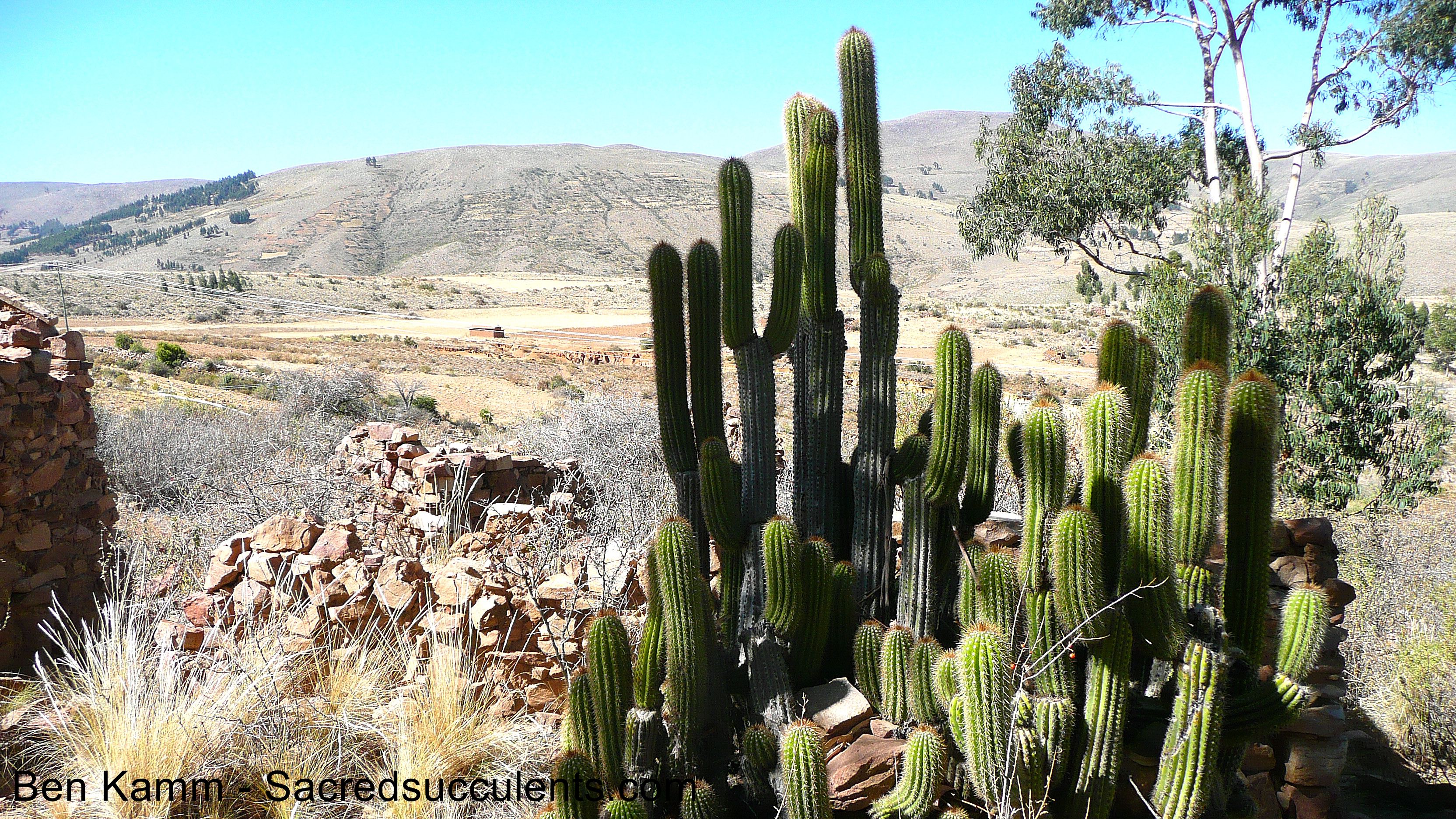
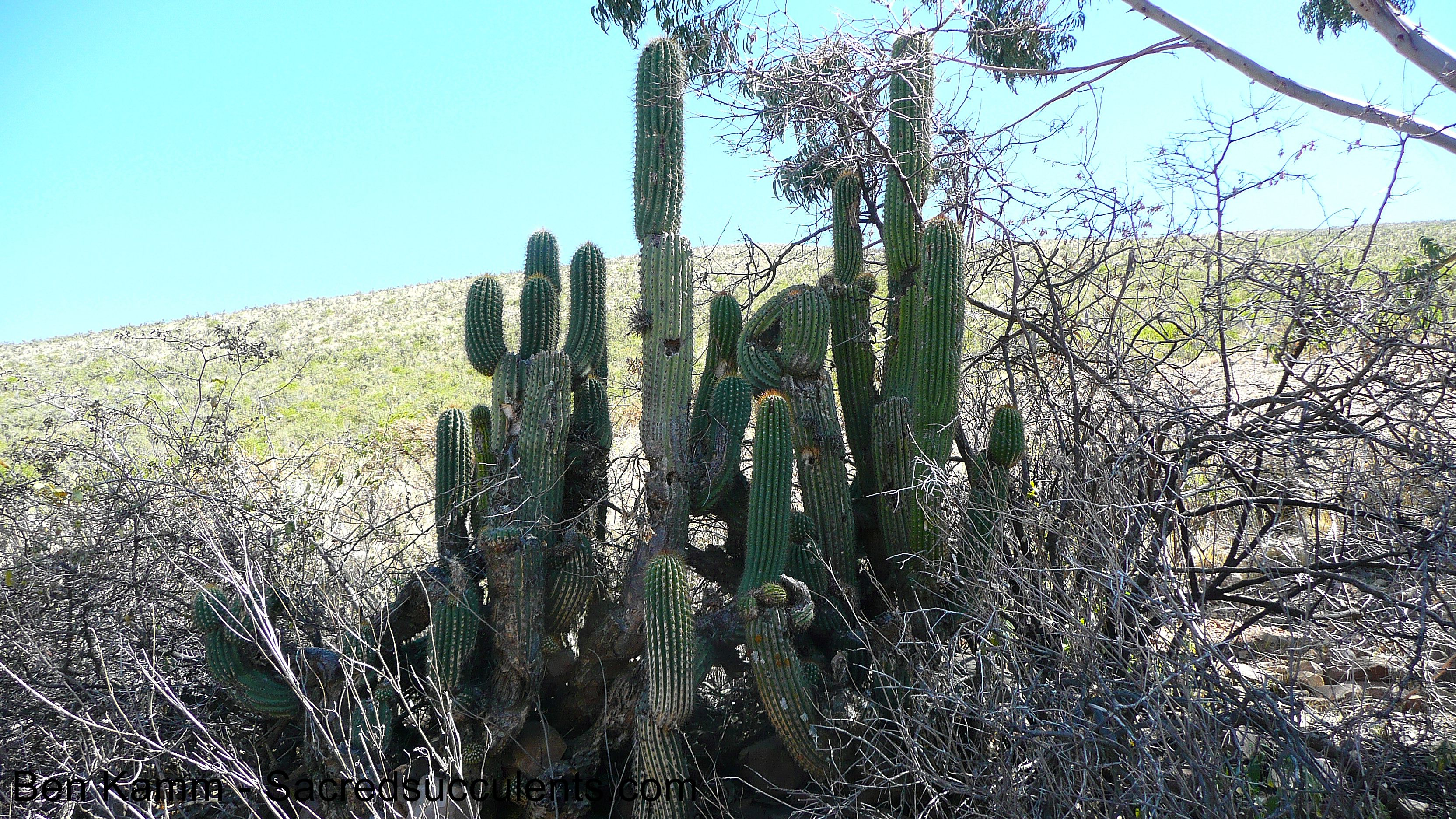
BK10511.1 Trichocereus vollianus, between Arani & Rodeo, Cochabamba, Bolivia

BK10511.1 Trichocereus vollianus, between Arani & Rodeo, Cochabamba, Bolivia


Copyright: Ben Kamm, Sacredsucculents.com


This is a very interesting plant and there arent so many descriptions available about it. This plant was encountered during the 2010 field trip. I am not sure if the ID is correct but I´ll add the description now and maybe we can get to the bottom of it. This plant has a lot of similarities to Trichocereus Lamprochlorus, which grows in Cochabamba in Bolivia too. The original description of this plant came from Backeberg in his book KAKTUS-ABC. The original typus location was said to be Arque in Cochabamba. The shoots have a maximum diameter of up to 10 centimeters, approximately 13 ribs and a very bright green yellow color. The epidermis of this plant has similarities to Trichocereus Spachianus, which has a very bright green color too. The ribs are 7 mm broad and are up to 5 mm high. The areoles are approx. 2-2,5 cm apart from each other. The plant has 7-12 radial spines and very fine and thin spines that can get up to 7 mm long. There usually is only one middle spine which can reach a lenght of 2,5 cm. All spines are yellow colored (Backeberg used the term “Amber”).


Flowers: The flowers of Trichocereus Vollianus are white and up to 12 cm long. However, I assume that the flowers depend greatly on the health of the plant and larger flowers wouldnt come as a surprise to me.


Fruit: Green and very hairy.


How to keep it apart from Trichocereus Spachianus?: Trichocereus Vollianus is very similar to Trichocereus Spachianus but thicker, even more shiny and has a brighter green epidermis. Backeberg also mentioned that they work very well as a grafting stock.


There also was a Trichocereus Vollianus var. Rubrispinus with reddish spines, which would probably be regarded as nothing but a local form under modern taxonomy. I encountered populations that had all kinds of forms growing together and this kind of stuff isnt really enough to justify a new species. I own a plant that I suspect to be Trichocereus Vollianus and I will post some pics of it soon.


Where to get seeds of Trichocereus Vollianus?: Well, it´s definitely a rare species. Sacred Succulents collected some seeds and gave them away under the name mentioned above but apart from that, there are very few sources that provide VIABLE seed. I still have some Seeds from Köhres but couldnt get them to germinate. Succeed had them every now and then and it´s worth a try to ask Sacred Succulents because they probably grew some from the seeds they collected. You could also make a posting in our Trichocereus Facebook group because I know of some people who were able to get some seeds back when they were sold by Sacred Succulents. Definitely an interesting plant!


263 BK10511


264 BK10511


265 BK10511


BK10511.1 Trichocereus vollianus, between Arani & Rodeo, Cochabamba, Bolivia

BK10511.1 Trichocereus vollianus, between Arani & Rodeo, Cochabamba, Bolivia

BK10511.1 Trichocereus vollianus, between Arani & Rodeo, Cochabamba, Bolivia


Copyright: Ben Kamm, Sacredsucculents.com


This is a very interesting plant and there arent so many descriptions available about it. This plant was encountered during the 2010 field trip. I am not sure if the ID is correct but I´ll add the description now and maybe we can get to the bottom of it. This plant has a lot of similarities to Trichocereus Lamprochlorus, which grows in Cochabamba in Bolivia too. The original description of this plant came from Backeberg in his book KAKTUS-ABC. The original typus location was said to be Arque in Cochabamba. The shoots have a maximum diameter of up to 10 centimeters, approximately 13 ribs and a very bright green yellow color. The epidermis of this plant has similarities to Trichocereus Spachianus, which has a very bright green color too. The ribs are 7 mm broad and are up to 5 mm high. The areoles are approx. 2-2,5 cm apart from each other. The plant has 7-12 radial spines and very fine and thin spines that can get up to 7 mm long. There usually is only one middle spine which can reach a lenght of 2,5 cm. All spines are yellow colored (Backeberg used the term “Amber”).


Flowers: The flowers of Trichocereus Vollianus are white and up to 12 cm long. However, I assume that the flowers depend greatly on the health of the plant and larger flowers wouldnt come as a surprise to me.


Fruit: Green and very hairy.


How to keep it apart from Trichocereus Spachianus?: Trichocereus Vollianus is very similar to Trichocereus Spachianus but thicker, even more shiny and has a brighter green epidermis. Backeberg also mentioned that they work very well as a grafting stock.


There also was a Trichocereus Vollianus var. Rubrispinus with reddish spines, which would probably be regarded as nothing but a local form under modern taxonomy. I encountered populations that had all kinds of forms growing together and this kind of stuff isnt really enough to justify a new species. I own a plant that I suspect to be Trichocereus Vollianus and I will post some pics of it soon.


Where to get seeds of Trichocereus Vollianus?: Well, it´s definitely a rare species. Sacred Succulents collected some seeds and gave them away under the name mentioned above but apart from that, there are very few sources that provide VIABLE seed. I still have some Seeds from Köhres but couldnt get them to germinate. Succeed had them every now and then and it´s worth a try to ask Sacred Succulents because they probably grew some from the seeds they collected. You could also make a posting in our Trichocereus Facebook group because I know of some people who were able to get some seeds back when they were sold by Sacred Succulents. Definitely an interesting plant!


263 BK10511


264 BK10511


265 BK10511


BK10511.1 Trichocereus vollianus, between Arani & Rodeo, Cochabamba, Bolivia

Dienstag, 9. Juni 2015

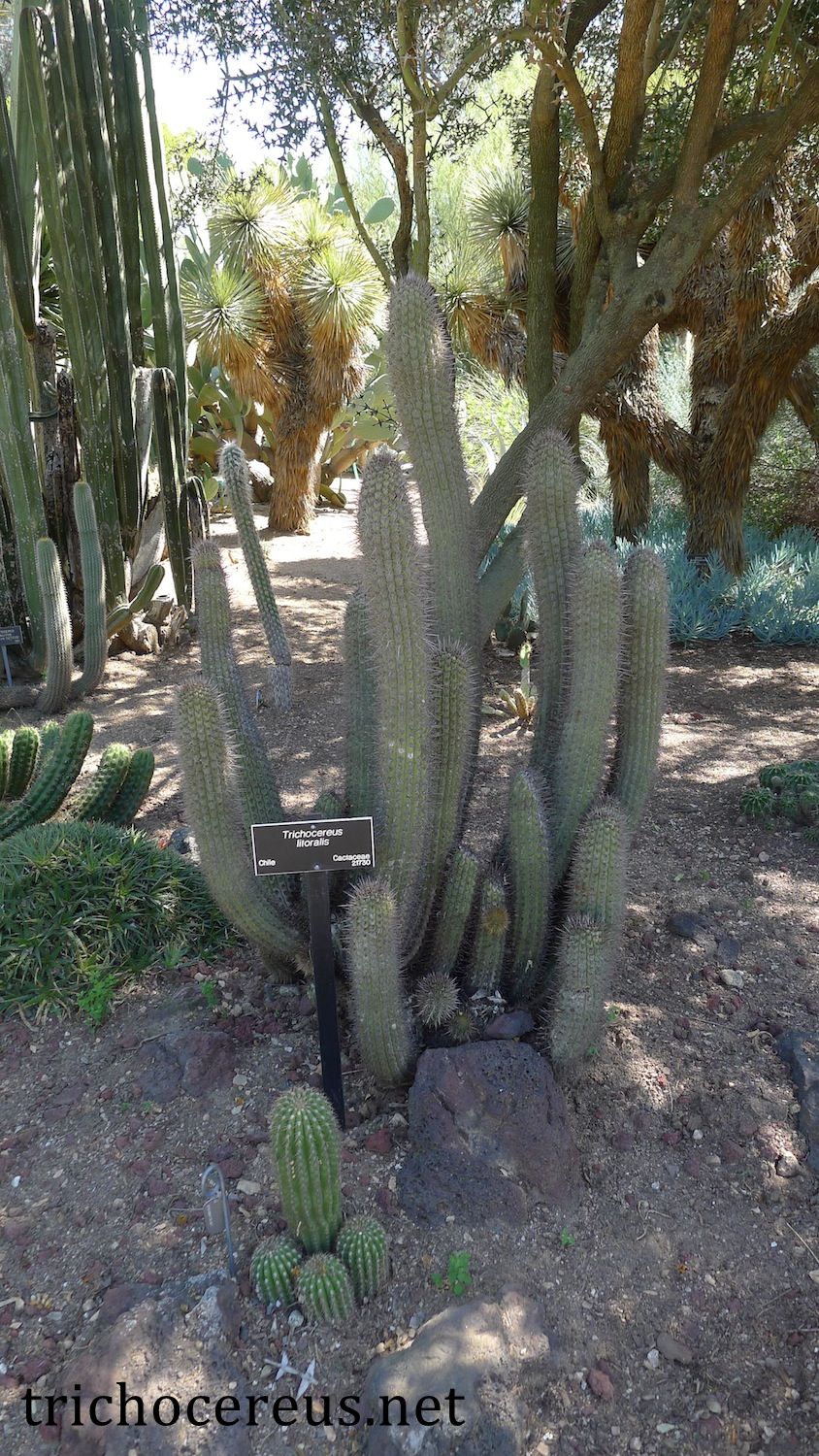
Trichocereus Litoralis - Echinopsis Chilensis var. Litoralis

Trichocereus Litoralis – Echinopsis Chilensis var. Litoralis


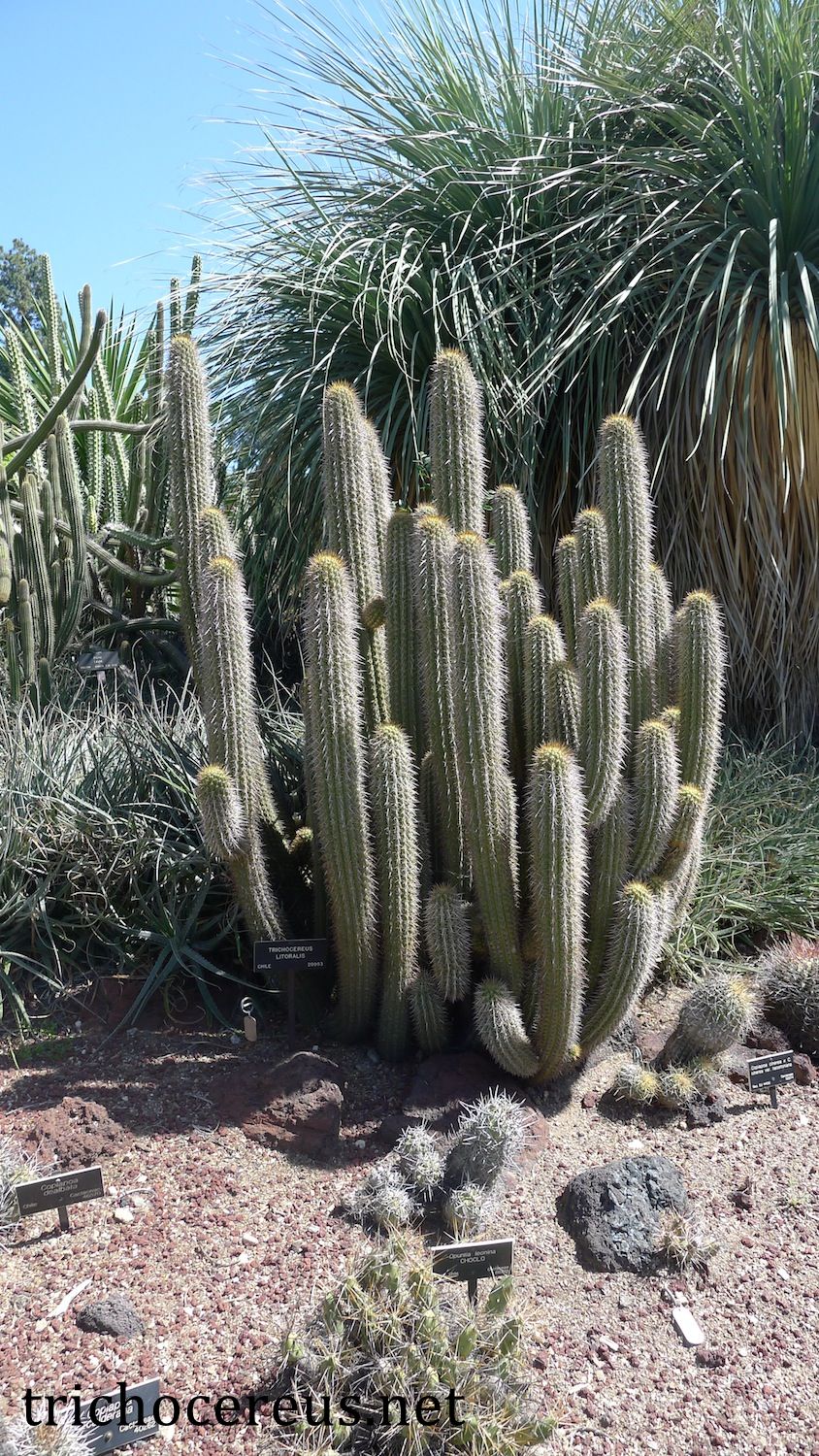
This beautiful Trichocereus is definitely closely related to Trichocereus Chilensis and the current taxonomy placed it as a variety to it. Trichocereus Litoralis always was a problematic species because there are so many intermediate forms between Trichocereus Chilensis and Trichocereus Litoralis that it is extremely difficult to draw the line somewhere. While some taxonomists included it in Trichocereus Chilensis (Chiloensis my butt), some others were strongly against it. Personally, I think that the whole group of plants surrounding Trichocereus Chilensis is very variable and we should simply respect that plants can be related to each other and at the same time, look a little bit different. The species is also very closely related to Trichocereus Skottsbergii, which I also regard as a variety of Trichocereus Chilensis.


Origin: Chile. Growing mostly around the coast. Coquimbo


Synonyms: Echinopsis Litoralis, Cereus Litoralis, Trichocereus Chilensis var. litoralis


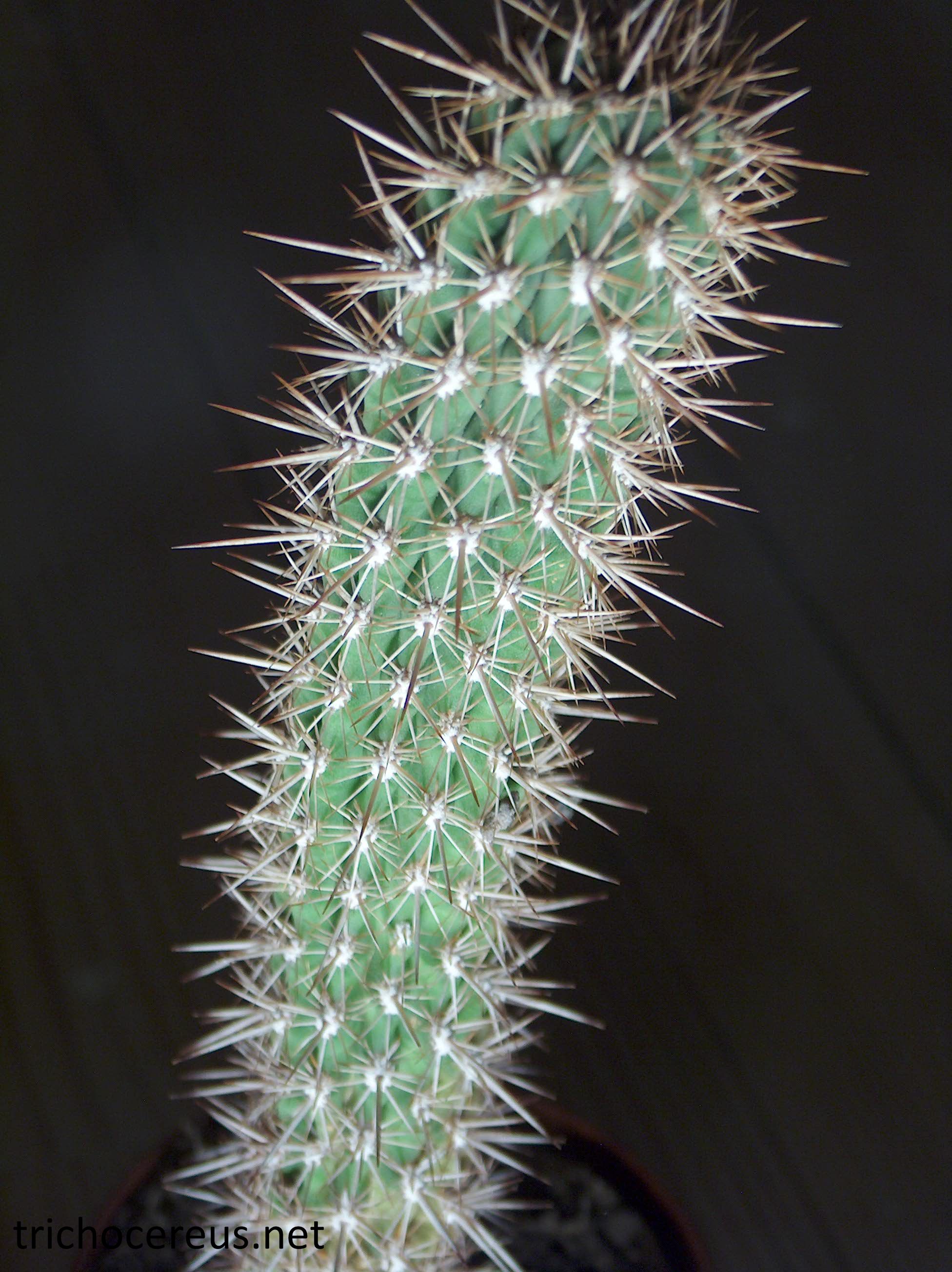
The location of the typus is in Zapallar, north of Valparaiso near the coast of chile. The species is widely distributed all across the coast up to Los Vilos. The many radial spines are needle-like, while the middle spines are pretty strong and thick and up to 3 cm long. It has 9-28 radial spines and 3-6 middle spines.


Trichocereus Chilensis usually doesnt get bigger than 1-2 meters. It has a very dark green color and and a maximum diameter of 10-15 centimeters.


Ribs: 15-22, areoles approximately 1-2 centimeters apart of each other.


Flowers: Trichocereus Litoralis has a white flower, which is extremely similar to the one on Trichocereus Chilensis. The flowers are up to 15 centimeters long, which is on the lower end of the scale for Trichocerei.


Fruit: Round, dark green. Up to 5 Centimeters in diameter


Where to buy seeds and cuttings of Trichocereus Litoralis: That´s actually a good question. There are a couple of specialized seed stores who have them in stock. I bought some seeds from Uhlig Kakteen once (and never sown them out) and it´s also available from Succeed sometimes. Every now and then, a plant shows up on eBay but it actually rater rare. If you are looking for a cutting, it might be worth the try to make a request in our Trichocereus Facebook Group, though it´s actually one of the species that I´ve seen very rarely. Still, it might be worth the try because we´re marching towards the 1000 members mark and one of them might be able to help you!


P1020054


P1020066


Trichocereus Litoralis echinopsis


Trichocereus Litoralis echinopsis 58c


Trichocereus Litoralis Richard Hipp


Trichocereus Litoralis355


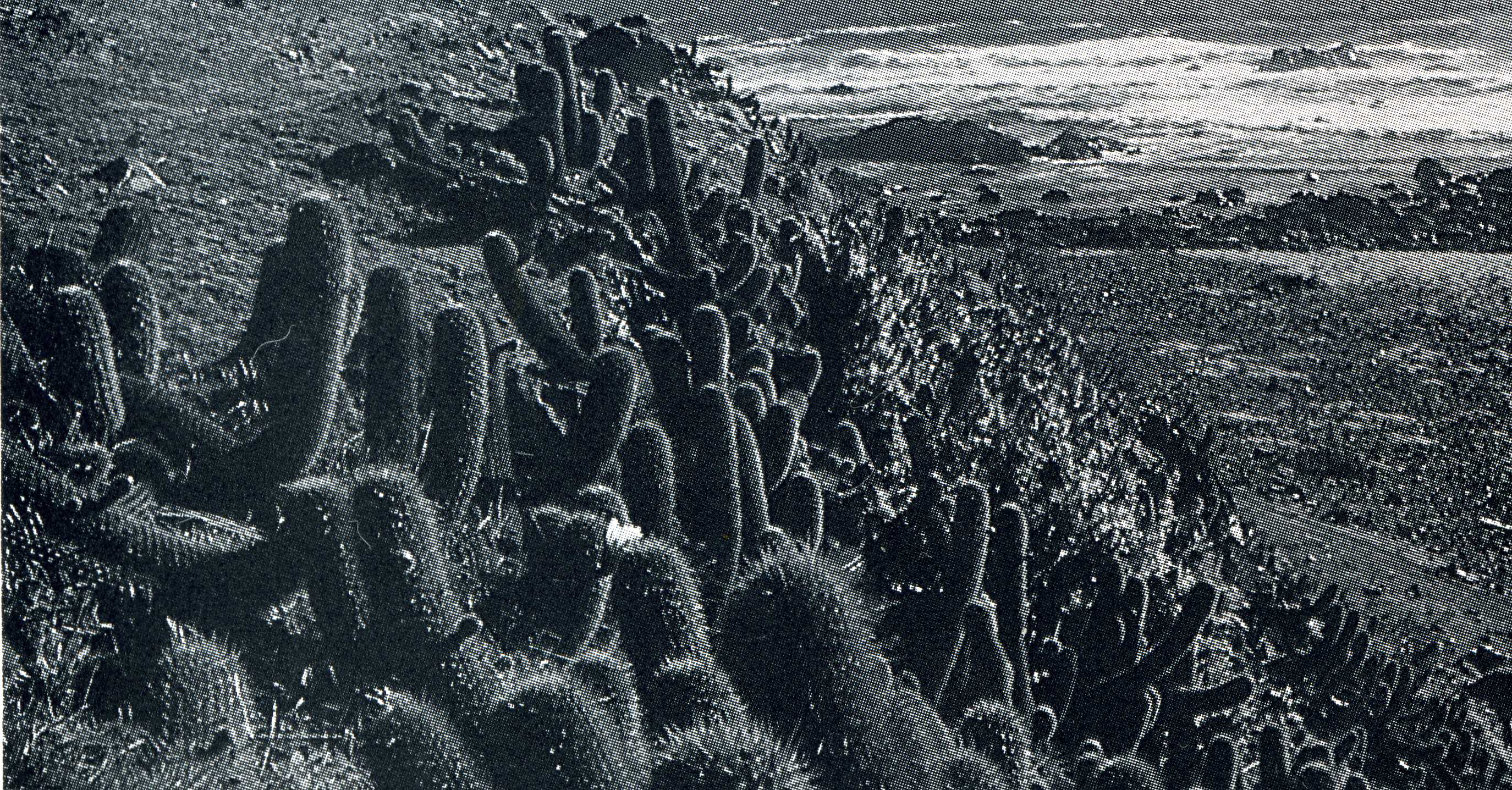
Have a look at this beautiful picture of Trichocereus Litoralis growing along the coast line in Chile.


Trichocereus Litoralis356


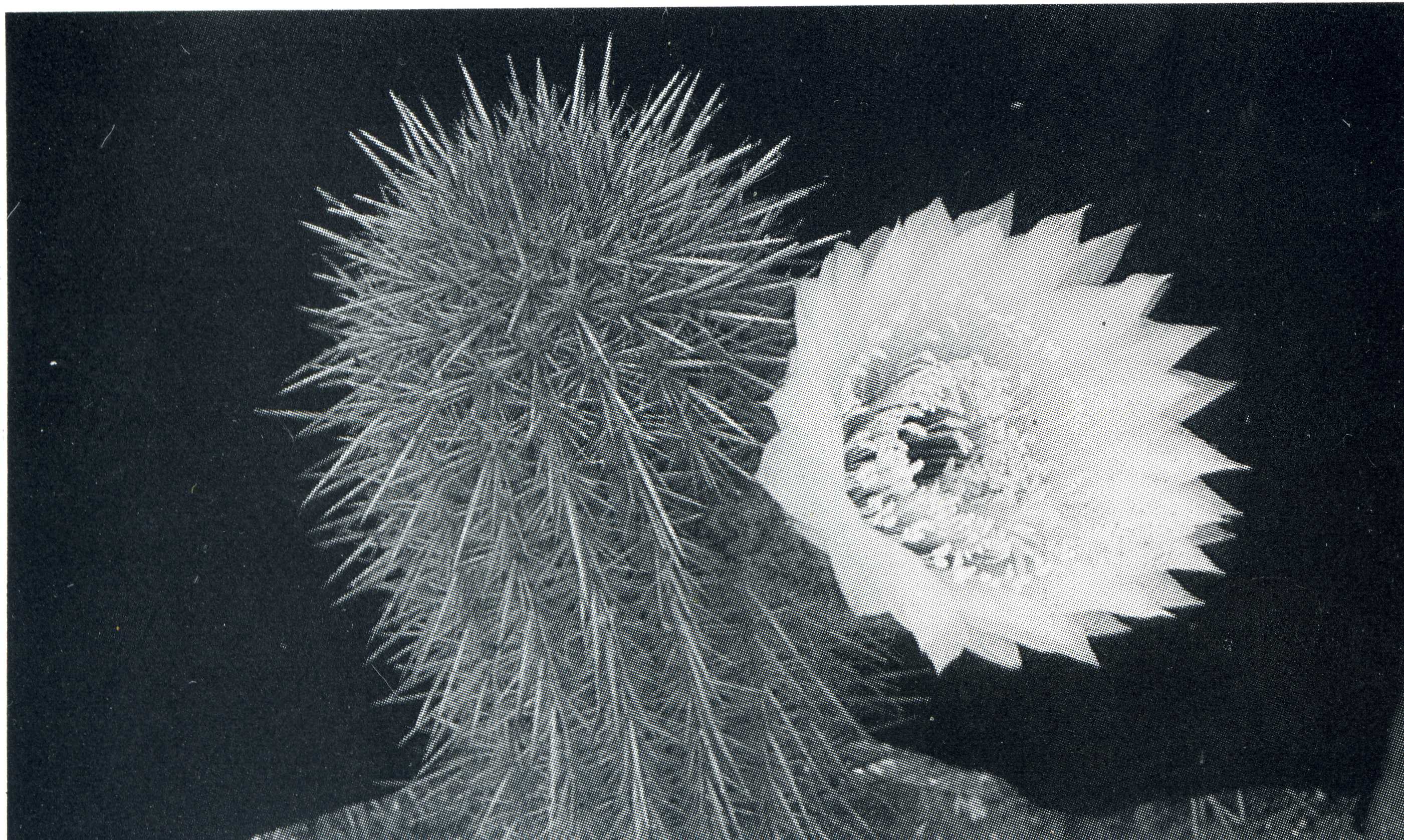
The flower of Trichocereus Litoralis is extremely beautiful and can be used in hybrid breeding. Unfortunately, those plants take very long until they reach adulthood.


Trichocereus Litoralis - Echinopsis Chilensis var. Litoralis

Dienstag, 2. Juni 2015

Rosei 1- Trichocereus Peruvianus

Rosei 1 – Trichocereus Peruvianus


Both Rosei 1 and Rosei 2 are among the most popular clones in the Trichocereus grower community. Just like so many great plants, they originated from the Fields collection in Victoria. The name was used in very old cactus literature to label a certain, very blue types of San Pedro. This name was mostly applied to the same plants that were later called “Trichocereus Macrogonus”. Which is another old name that is no longer in function. The name Trichocereus Rosei was never an officially described species and that´s why the Rosei 1 and Rosei 2 can only be called “commercial varieties” of simply a local form of Trichocereus Peruvianus. It´s not clear where the Rosei 1+ Rosei 2 seed came from but based on the fact that they both originated from the Fields collection, chances are that they grew out of the same seed bag.


Despite the fact that Rosei 1 and Rosei 2 are actually clones, you can find very similar Peruvianus specimens in nature. In particular, one of the types that occur in Matucana is very similar and chances are, that Rosei 1 and Rosei 2 originally came from that area too.

But because of the countless “planted” populations that can be found throughout the habitats, you can sometimes encounter similar plants at different locations too. So we probably won’t be able to find out where exactly they came from, but I´ll have a look at old cactus catalogues to see if there might be some old seed lists that include the collection sites.

According to people who visited the Fields family, those plants originally came from South America. But since that´s really a very big area, that´s not really helping. It is said thatRosei 1 has shorter spines than Rosei 2 and usually has a more glaucous/blue epidermis. But because the environment can have a huge influence on the look of a plant, I am not entirely sure about what´s normal for this clone and what not.


T. peruvianus


T. peruvianus


T.peru Roseii1 Flower_1


T.peru Roseii1 Flower_2


T.peru Roseii1 Flower_2


T.peru Roseii 1_1


Rosei 1 Open (2).JPG


This is a Hybrid between Rosei 1 x Open


Rosei 1 Open (3).JPG


Rosei 1 Open (1).JPG


Another plant from a ROSEI 1 x OPEN cross


Rosei 1 Open (4)


Roseii 1 x Pach (2)


Rosei 1 x Pachanoi


Roseii 1 x Pach (1)


T. peruvianus


Rosei 1- Trichocereus Peruvianus

Donnerstag, 30. April 2015

Trichocereus Strigosus

Trichocereus Strigosus


Synonyms: Cereus Strigonus, Echinopsis Strigonus, Cereus Myriophyllus, Trichocereus Strigonus,


This plant grows in direct neighborhood with Trichocereus Candicans and was cataloged by Gilles in 1833. But back then, the plant was not described until 1834 when Salm-Dyck took the effort to write a complete description. Trichocereus Strigosus and Trichocereus Candicans both grow around Mendoza. The original name was Cereus Myriophyllus (Gilles) but it was changed to Trichocereus Strigosus because it was based on a nomen nudum and that´s why Salm-Dyck´s description has priority over the older name Cereus Myriophyllus.


Flower: Up to 20 centimeters large, white. Trichocereus Strigosus is a night flowering species. It also is self-sterile, what means that you need pollen from another donor to produce seeds. Please not that there is a white form of Trichocereus Strigosus.The white flowering variety of this plant grows at around 1600 meters altitude. The plant is pupping from the base and only reaches around 60-65 centimeters in height.


Ribs: Trichocereus Strigonus has 15-20 ribs and the shoots have a maximum diameter of 5-8 centimeters.


The Areoles are white/beige felted and reach a maximum diameter of 5mm. Every areole are approximately 3-6 mm apart from each other.


Spines: Yellow, very thin and fine spines, up to 3 centimeters long, 10-15 radial spines and 2-5 middle spines that can get up to 5,5 centimeters long. The plant has very long and fierce spines.


In addition, there are some other forms/varieties. One of them was originally known as Trichocereus Strigonus var. Flaviflorus and only occurs in Famatina, Province La Rioja in Argentina. This type has a yellow flower and is day flowering. The flowers are between 12-14 centimeters large. The yellow flowering variety grows a couple hundred meters below the white flowering one. In addition, the yellow flower is shorter.


Cultivation: The species is very rare in cultivation, though it sometimes shows up in cactus collections all around the world. The plant should be kept relatively dry, though it can be watered in the summer when it´s pretty hot. As it grows in the neighborhood of Trichocereus Candicans, it requires similar conditions. Trichocereus Strigonus likes getting a fair amount of sun light but shouldn´t be baked in full sun all day long. They usually grow in semi-shade and can form amazing clusters.


Seed & live cutting sources: Trichocereus Strigonus is very far, but seed sellers have it in stock every now and then. I bought seed from Köhres a couple of years before and I am pretty sure that Kakteen Haage or Uhlig will have some of them every now and then too. The plants are really rare on ebay but it sometimes happens that they show up as Trichocereus sp. Without the flower, it´s definitely a hard to ID species.


Winter protection and frost tolerance: Trichocereus Strigonus is able to take a light amount of frost but everything lower than -5° celsius is dangerous and can lead to permanent damage or death. Plants need to be kept completely dry if the temperatures drop below 10° celsius/50° Fahrenheit and it´s best to keep them in a bright, well ventilated area. The minimum average temperature is 10° celsius.


Seed germination: The seed germinates very easy, if it´s actually fresh. Especially with those rarer Trichos, there are problems regarding the viability of the seeds. I think Succeed has them in stock too and if possible, ask the seller in advance if he knows how old the seed is. That´s a good rule of thumb anyway and these days, I do it for all my seed orders.


1280px-Echinopsis_strigosa_(1)“Echinopsis strigosa” by Ryan Somma


Echinopsis_strigosa_(8417473500)Vela de la Virgen, Trichocereus strigosa, La Rioja desert – Picture “Echinopsis strigosa by Dick Culbert –


1280px-Echinopsis_strigosa


Echinopsis strigosa” by Ryan Somma – Echinopsis strigosa


Trichocereus Strigosus

Mittwoch, 29. April 2015

Trichocereus Smrzianus

Trichocereus Smrzianus – Echinopsis Smrzianus Backeberg


Backeberg described this plant in his KAKTUS ABC, a book that was not really widely available. Besides the species is highly controversial because this plant is probably synonymous with some forms of Soehrensia.


Synonyms: Trichocereus Smrziana, Soehrensia Smrziana, Soehrensia Smrzianus, Echinopsis Smrzianus


Origin: Argentina, Salta


Description: Grows alone or in groups of larger clusters. It has a large, round body and reaches a maximum diameter of 2 meters and can get up to 60-70 centimeters tall. The plant is extremely variable and can grow like a clustering cactus or in a columnar way, very similar to Trichocereus Spachianus. It has between 10-15 ribs and only grows at one locaction at the location of the typus. That makes this cactus extremely rare, though it is generally available and sometimes shows up in cactus collections. The fact that the plant has so many ribs, makes it distinguishable from plants like Trichocereus Candicans or Spachianus. The bigger the plants get, the broader the ribs are, what gives it a very typical Soehrensia look and it´s definitely closer to Soehrensia than to Trichocereus.


Spines: The very thin spines are usually yellow to white. Plants can have between 8-15 spines on one areole but Trichocereus Smrzianus is extremely variable, what makes it so hard to ID. However, the fact that it only grows on one location in Chachipampa should make the id pretty easy. It has betwen 1-4 middle spines that are up to 3 centimeters long.


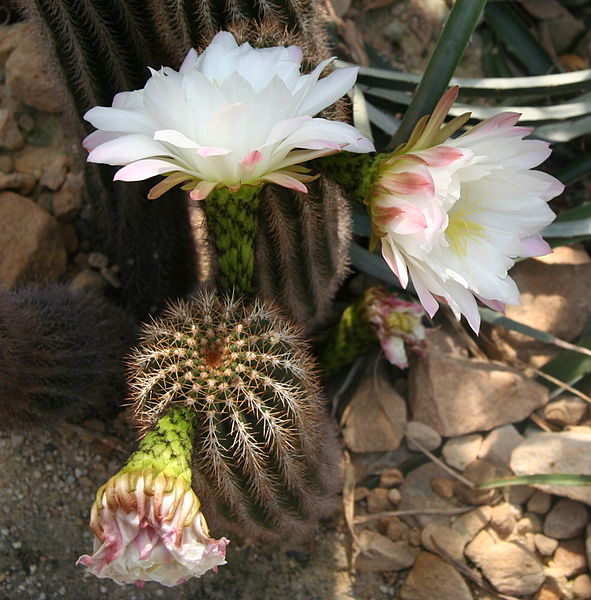
Flowers: Trichocereus Smrzianus flowers white. The plant flowers from the upper part of the body, what you can see on the featured image very well. The flowers get between 10-20 centimeters long and look very similar to the ones on Trichocereus Tarijensis.


Fruit: Trichocereus Smrzianus has a round, green fruit that is between 2-5 centimeters in diameter and taste very nicely. The name is a really bad example of how a name should not be. Not sure how it is in your language but in mine, it sounds like you get a seizure while biting your tongue off.

The taxonomic status of the genus Soehrensia was very inconsistent and taxonomists have moved them back and forth from Trichocereus to Echinopsis a couple times now. After the merger with Echinopsis, taxonomy went full circle and re-declared Soehrensia as an accepted genus and it seems like it might stay like that. However, the plant is definitely close to Trichocereus Tarijensis and it´s definitely possible that Trichocereus Smrzianus is just a natural hybrid between Trichocereus Tarijensis and another plant from it´s direct neighborhood.


Emőke Dénes Echinopsis_smrziana_-_Kew_Gardens_1Emőke Dénes Echinopsis_smrziana_-_Kew_Gardens


Oslo Sukkulentforening Soehrensia_smrzianaOslo Sukkulentforening Soehrensia_smrziana

by Michael Wolf Echinopsis_smrziana_02


by Michael Wolf Echinopsis smrziana


by Michael Wolf Echinopsis_smrziana_01


Trichocereus Smrzianus

Montag, 27. April 2015

Trichocereus Cuzcoensis - Echinopsis Cuzcoensis

Trichocereus Cuzcoensis – Echinopsis Cuzcoensis

Current name: Echinopsis Cuzcoensis

Trichocereus cuzcoensis is now called Echinopsis Cuzcoensis under the new taxonomy. That means that it is an accepted species, despite it´s obvious similarity to Trichocereus Peruvianus. There are countless intermediates between Trichocereus Peruvianus and Trichocereus Cuzcoensis and there are many regional types, especially where both grow together, that show traits of both species.  As an example, there are Peruvianoid forms of Trichocereus Cuzcoensis and there are specimens of Trichocereus Peruvianus that show some traits of Trichocereus Cuzcoensis. Personally, I think that Trichocereus Cuzcoensis and Trichocereus Peruvianus are so similar that it is not really reasonable to keep them divided. So far, i´ve seen at least 50-60 regional forms of Trichocereus Cuzcoensis and where ever they grow in neighborhood of Trichocereus Peruvianus, they hybridise with each other and form so called transitional forms. The whole group around Trichocereus Peruvianus is extremely variable and that also includes Trichocereus Cuzcoensis. Please note that Trichocereus cuzcoensis is MORE than just KK242, what has become THE textbook definition of a Trichocereus Cuzcoensis. And the hate surrounding the KK242 gave the whole group a bad rep and that´s absolutely not justified. There are countless varieties that come from the complex around Trichocereus Cuzcoensis and I will use this page this show you all the faces that Trichocereus Cuzcoensis can have. Because there are countless Trichocereus Cuzcoensis types, I´d like to ask you to submit me pics of your Cuzcoensis plants so we can get a better overview about what´s out there. I will publish every submitted photo, so if you have some for this page, send me a message on facebook or through the contact page.

Description: Echinopsis Cuzcoensis (Britton & Rose)

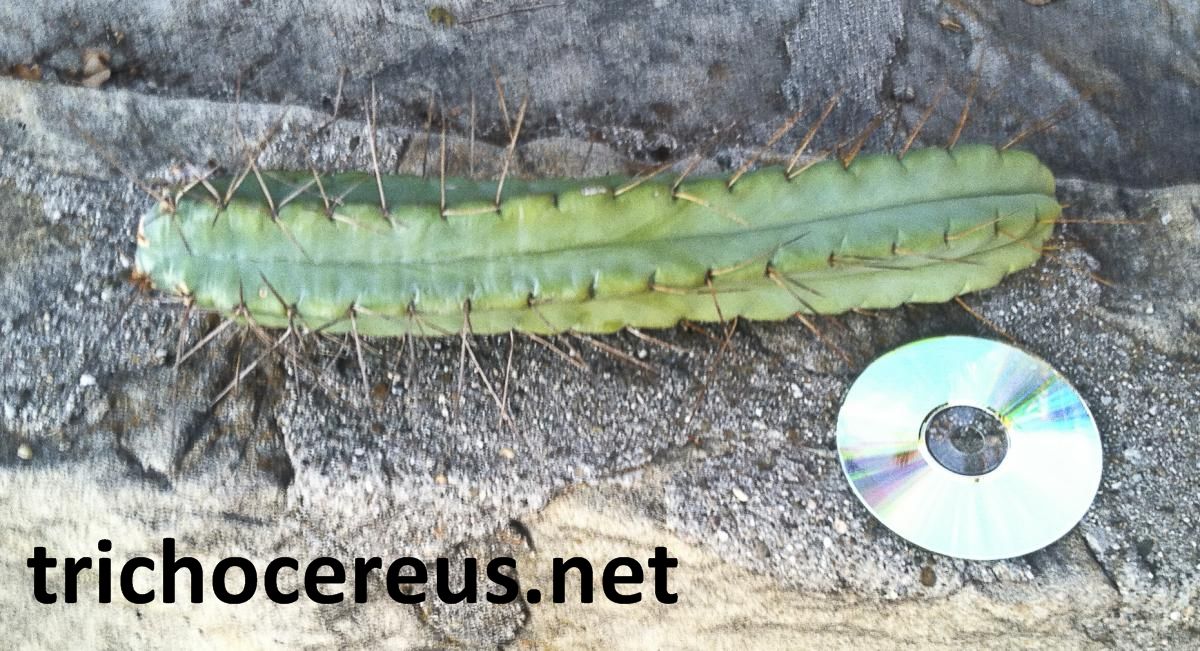
Trichocereus Cuzcoensis is a columnar cactus that grows like a tree and pups from the base. It can get more than five meters tall, though most collection plants that are grown in pots do not exceed 2 meters. However, in countries like Australia, there are many huge plants of Trichocereus Cuzcoensis to be found. New growth has a bright green color. It can get between 5 and 8 rounded Ribs and the areoles are approximately 1-2 centimeters apart from each other. Trichocereus Cuzcoensis has many, very strong spines. The number of spines is very variable but in most cases, I observed between 8-12 spines. The spines usually have a rounded, knobby base. New spine growth is yellow or dark brown while old spine growth is usually dark gray to white with slight black undertones or black spine tips. The spines usually are between 5-10 centimeters long.

Trichocereus Cuzcoensis is a night-flowering species but the flowers usually stay fresh until the morning of the next day. Trichocereus Cuzcoensis is self-sterile. That means that you need another specimen as pollen donor in order to produce seed.

Flower: The flower color is white and the flower is usually very large. It measures up to 16 centimeters, the tube is green and 7-8 centimeters long. Petals are approximately 5 centimeters long and there are hairs covering the flower.

Typus Location: Peru, Cuzco

Synonyms & Varieties: Trichocereus Knuthianus, Trichocereus Crassiarboreus, Cereus cuzcoensis, KK242, KK340, KK1911 Knuthianus,

Cultivation: Trichocereus Cuzcoensis is grown just like other Trichocereus species. It´s a very tough and frost hardy species and is able to cope with temperatures down to -9° celsius/15.8° Fahrenheit for short periods of time. The minimum average temperature is 10° celsius/50° fahrenheit. That temperature is also the minimum temperature that it needs to stay healthy during the winter.

Winter protection: Trichocereus Cuzcoensis can be overwintered in a bright and well ventilated place. The temperature should be around 9-10° celsius and the plants need to be completely dry. In european countries, the growers stop giving water and fertilizer in late summer (September or October) and take em in until early May or April. Keeping the plants dry and cold over winter also helps to increase flower production. Plants that are kept in a warm room over the winter lose their ability to flower. Besides, plants or seedlings need to be watered on a regular basis as soon as you have them in a heated room. If you want to overwinter a Trichocereus in a warm room (20°-30° celsius), you have to water it on a regular basis. You can only overwinter a plant “dry” if the temperatures are low.

Growing Trichocereus Cuzcoensis from seed: Trichocereus Cuzcoensis is very easy from seed, because it is relatively resistant to most pests. One of the biggest challenges is to get good quality seed because most Cuzcoensis seed on the market is pretty old and some do not even germinate. I am constantly looking for interesting new types of Trichocereus cuzcoensis, because they are amazing plants. Take a look at the pics from the Sacred Succulents Field Trips that are labeled “Cuzcoensis” and you will most likely agree. Germination temperature for Trichocereus Cuzcoensis is between 26° and 30° celsius. It only needs very little water to induce germinations and if you have quality seed, they will germinate within 2-6 weeks. If nothing shows up by the 6th week, you will probably not get germinations at all. In this case, remove the lid, let the soil dry out and start with the germination process again. Those cycles mimic the way this actually happens in nature and sometimes, you will be able to re-activate dead seed. You can also add GA-3, which is Gibberellic Acid or use a strong HPS or LED lamp to wake the seeds up, because ultraviolet light increases germination rates. In general, Trichocereus seeds need light to germinate, so dont cover them with soil.

Trichocereus Cuzcoensis Seed Sources: I will use this segment of my text to add good quality seed sources for Trichocereus Cuzcoensis but right now, I do not know any supplier that can provide viable seed. Köhres used to have them but right now, they are not available anymore. I know of one Peruvian Seed-Wholesaler that occasionally has some, but they are usually crap because in most cases, they will not be viable anymore.

Trichocereus Cuzcoensis KK242 Master EvanThis looks like a very typical Trichocereus Cuzcoensis KK242. This type was originally brought into cultivation by Karel Knize. He also sold various types of similar plants labeled as Trichocereus Cuzcoensis, Trichocereus Macrogonus or Trichocereus Peruvianus. The label KK242 does not refer to a particular plant but the area where the seeds/cuttings were collected at. Because of that, there are many plants labeled KK242 which are NOT a Trichocereus Cuzcoensis. The type just looks so unique and remarkable that it stuck and most plants that look like this are usually identified as KK242. Which is not really correct because that´s just one of the many types that grow within the KK242 range. However, most of the KK242 are in fact Trichocereus Cuzcoensis. Pic: Master Evan

TravelerAnother KK242

Trichocereus Cuzcoensis 74_a

Copyright: K.Trout – This probably shows the Knuthianus variety.

trichocereus cuzcoensis trichocereus_net

A large mother plant. Potentially the Tarmaensis Variety of Cuzcoensis

Trichocereus Cuzcoensis KK242 Rio Lurin_J33_2_jpg

One of the many faces of KK242. Copyright K.Trout

Trichocereus Cuzcoensis _c

3 Trichocereus cuzcoensis, Lamay, Cusco, Peru 2010 copyright B

Copyright: Ben Kamm, Sacred Succulents

trichocereus cuzcoensis trichocereus_net 2


Trichocereus Cuzcoensis - Echinopsis Cuzcoensis