Haageocereus seeds available
Hey guys, I have some Haageocereus seeds available.
30 seeds – 3,00 Euro
100 seeds – 8,50 Euro
500 seeds – 38 Euro
1000 seeds – 75 Euro
Photo: Michael Wolf
I guess the deeper I get into the rabbit hole, the more I appreciate the Peruvian Haageocereus species. Those...
Haageocereus seeds available

Posts mit dem Label buy seeds werden angezeigt. Alle Posts anzeigen
Posts mit dem Label buy seeds werden angezeigt. Alle Posts anzeigen
Montag, 22. August 2016
Haageocereus seeds available

Dienstag, 7. Juni 2016
ICARO DNA (Trichocereus peruvianus)
ICARO DNA (Trichocereus peruvianus)
Hi Folks, time for another posting here on the website! It´s time to take a closer look at the ICARO DNA Trichocereus peruvianus strains, which were around for at least 10 years.
Their strain is an extremely blue and spiny Peruvianus strain that comes from M...
ICARO DNA (Trichocereus peruvianus)
Freitag, 22. April 2016
NL52509a Trichocereus, Potosi, Bolivia
NL52509a Trichocereus, Potosi, Bolivia
NL52509a Trichocereus is a cool and rare Trichocereus species from Potosi in Bolivia. Sacred Succulents Field Trip 2009! Copyright Neil Logan & Sacredsucculents.com!
As far as i know, this one was suspected to be Trichocereus validus. Personally, i think it is Trichocereus tacaquirensis but it´s hard to say just judging by those two pictures. Both plants are definitely similar and if you are interested in seeds of Trichocereus tacaquirensis, check out the new seeds I have in stock!
Trichocereus tacaquirensis Seeds – Buy/For sale
3,00 €
VAT free based on §19 UStG
Versandkosten plus Shipping Costs
Rechtsverbindlich Kaufen / Buy Now

The plants we grew from those seeds looked 100% like a plant from the Tr. taquimbalensis group and it´s a common thing that plants related to Trichocereus taquimbalensis are labeled as Trichocereus validus. That is because Trichocereus validus probably came from Bolivia and both are probably very similar at an older age. At a younger age, that is definitely not the case.
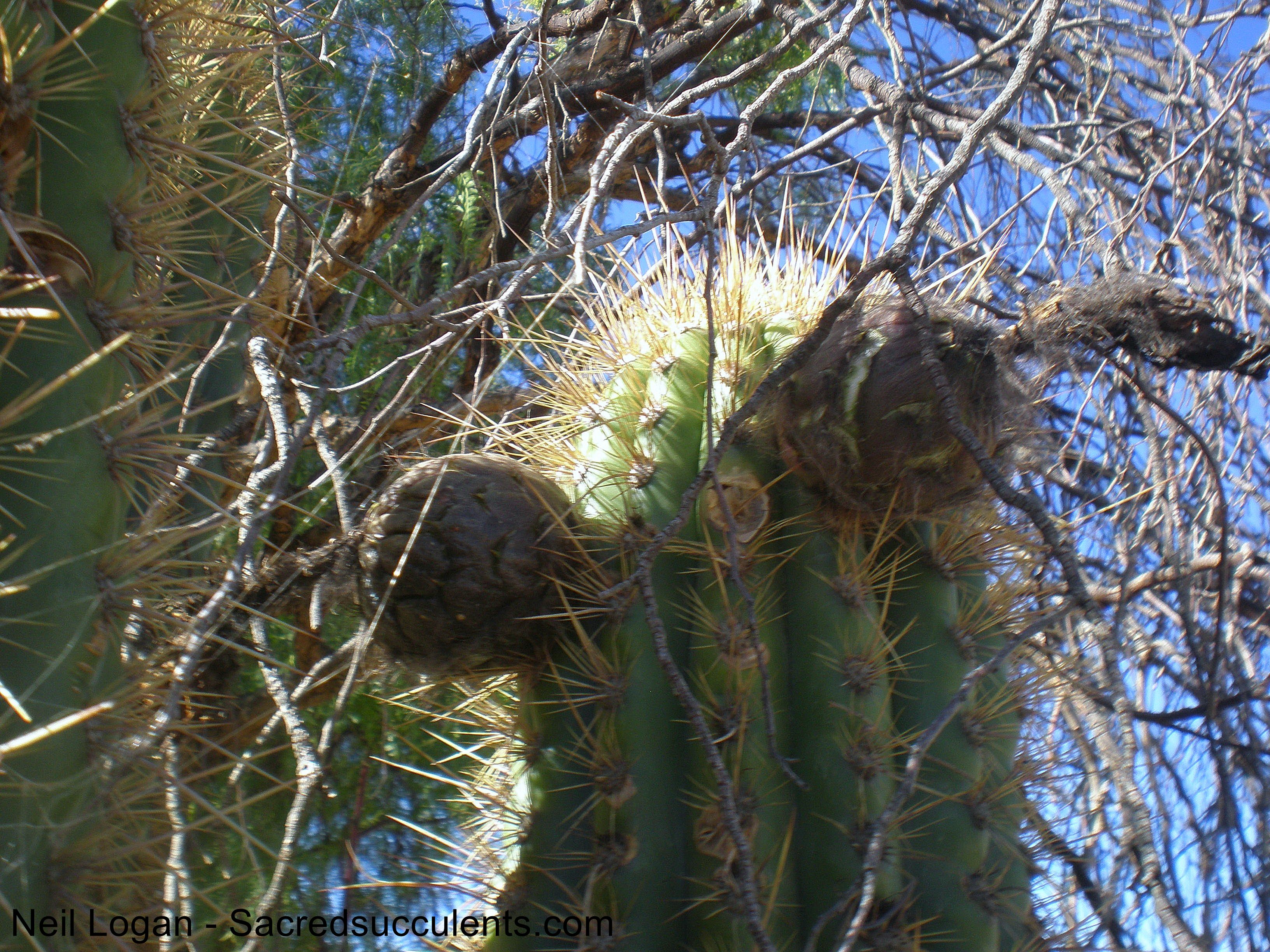
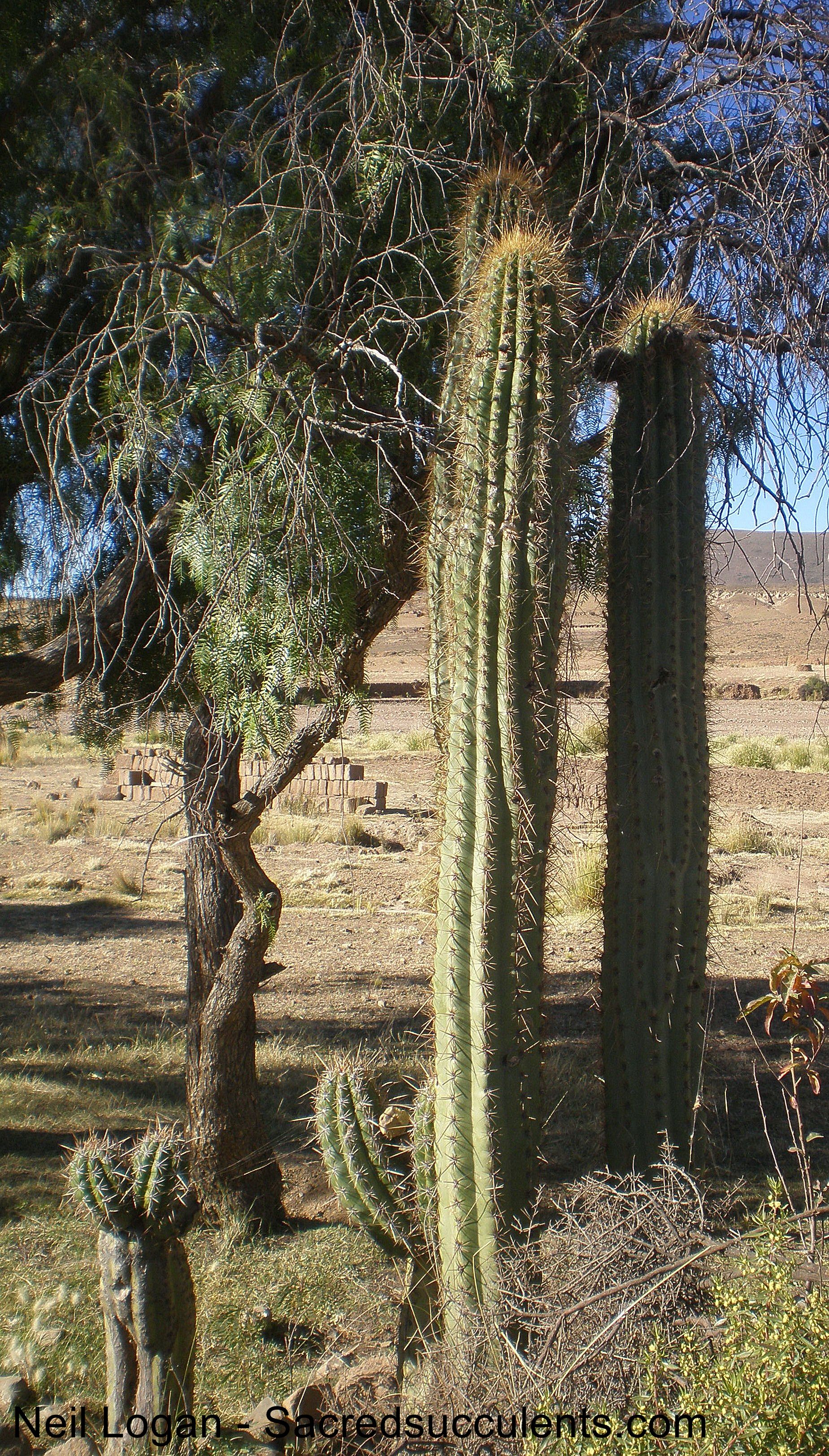
NL52509a Trichocereus, Potosi, Bolivia
Freitag, 1. April 2016
SS01 (Trichocereus peruvianus)
SS01 (Trichocereus peruvianus)
The SS01 clone was brought into cultivation by Sacred Succulents. It is one of their oldest clones, going back many years and the number of hybrids that involves it is really high. It actually is a very blue Trichocereus that would usually be called Tr. peruvianus or Tr. macrogonus outside the SS nursery. The origin of this plant is unknown, but because of Sacred Succulent´s constant work with this clone, it is widely distributed.
Here is an excerpt from the Sacred Succulents description of SS01:
SS01 (Trichocereus peruvianus or Trichocereus macrogonus)
Columnar cactus up to 8´+ tall. Fat blue-green stems up to 6″ in diameter and 2″+ spines. Huge white nocturnal flowers. Can grow very fast; up to several feet a year. Tends to grow prostrate with age. We believe this to be a clone of either Trichocereus macrogonus or Trichocereus peruvianus. Cold hardy to 25° Fahrenheit.
My personal impression of this plant is that it is one of the plants that were originally sold by Karel Knize. Those were really common at the time this clone showed up and I would not be surprised if it was one of them.
Sacred Succulents used this clone to create many hybrids, such as SS01 x Tr. pachanoi, SS01 x BBG, SS01 x Tom Juul´s Giant, SS01 x SS02 and many more. If you want to buy some seeds or cuttings of Trichocereus SS01, check out the Sacred Succulents website.
Those photos show the SS01 clone and are not hybrids. I will have a huge number of SS01 hybrid pics in my upcoming book SAN PEDRO HYBRIDS, which will be out in 2017.


SS01 (Trichocereus peruvianus)
Donnerstag, 31. März 2016
Trichocereus pallarensis
Trichocereus pallarensis

Trichocereus pallarensis is a species that was described by Friedrich Ritter and listed in his WINTER catalogs starting in 1961! I do have most of the old Winter catalogs, but I unfortunately not the ones after 1960. But that´s not a problem as I have a whole lot of other information about Trichocereus pallarensis.
Ritter wrote about this species numerous times. He basically called this plant a „variety of Trichocereus pachanoi“, but described it as a new species just in case. Back then, it was common that botanists or taxonomists wrote new descriptions only based on minor differences, that would only be seen as a regional form by today´s standards.
Trichocereus pallarensis has 3 – 6 radial spines (15 – 50 mm long). Those are brown or honey colored and relatively thin compared with the ones on Trichocereus peruvianus and Trichocereus pachanoi. The middle spines are often missing or there is only one very strong and long middle spine. It is very similar to Tr. pachanoi in regards to the spination and most of the spines are only few millimeters long. The areoles are often very small and those packed areoles usually tend to miss the one middle spine as well.
Flowers: Friedrich Ritter was not able to get a good description of the flower and I am working on one myself. The plant is very rare and if you happen to have a flowering sized one, please let me know so we can improve the flower description. With that said, it comes from the Pachanoi group and is probably almost identical to the one of Tr. pachanoi. The flower is definitely white, but I´d love to measure it some more.
Fruit: The fruit of Trichocereus pallarensis is 5 cm long and 4 cm thick. Covered with GRAY wool.
Seeds: The seeds of Trichocereus pallarensis are identical to the ones on other Tr. pachanoi types.
Origin/ Type locality: Trichocereus pallarensis grows in Llancora, near Cajamarca. Near Pallar (that´s where the name comes from) and east of the cordillera Blanca. Department Ancash at 2.500 – 3.000 meters altitude.
Where to buy Trichocereus pallarensis seeds and plants:
Trichocereus pallarensis is very rare and only a few shops have them in stock. If you want to buy seeds of Trichocereus pallarensis, please join my seed list and I´ll let you know next time I have some. You can also get some fresh seeds from Sacredsucculents.com every now and then. They have a beautiful number of crosses that they produce every year. You might also be able to get some from Cactusaffinity and Misplant.

Trichocereus pallarensis FR1468 Locality: Machar, Peru (Ritter)
Trichocereus pallarensis
Mittwoch, 6. Januar 2016
Omar (Trichocereus)
Omar (Trichocereus / Echinopsis)
Omar is a Trichocereus clone from Australia.
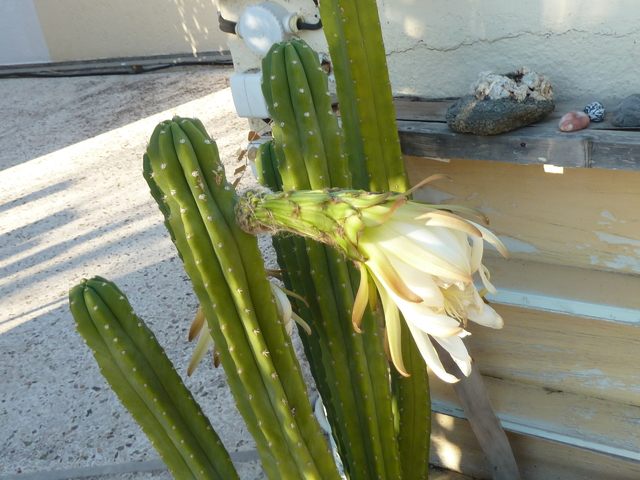
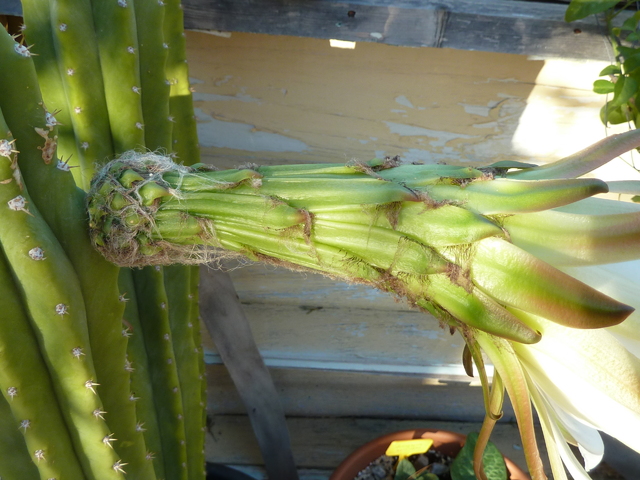

OMAR is a Trichocereus pachanoi clone that was most likely brought into circlulation by the former SAB members REV or Gomaos. The plant was also offered by the SAB shop, where it was sold alongside a similar hybrid called ALF. That leaves room for speculation and it´s possible that both plants (OMAR & ALF) were grown from the same seed pod or at least, were representatives of the same regional type. I personally have trouble looking at OMAR without seen anything but the well known PC Pachanoi „clone“, which is probably Friedrich Ritter´s TRICHOCEREUS RIOMIZQUENSIS from Bolivia. This PC (short for predominate cultivar, as it is the most common type of Pachanoi throughout North America) is widely distributed all over Australia as well.
OMAR has the same yellowish look that almost all Tr. riomizquensis had in common. Besides, the areoles and the small stump spines are really typical. And on top of that, it has the same type of flower.
Again, I did not have the chance to observe this plant over the course of a few years, but what I´ve seen on some of the pics looks a lot like the predominate cultivar.
https://trichocereus.net/omar-trichocereus-echinopsis-pc-predominant-cultivar
Dienstag, 5. Januar 2016
Trichocereus thelegonus / Echinopsis thelegona Friedrich & Rowley
Trichocereus thelegonus / Echinopsis thelegona Friedrich & Rowley
Pic: Noah Reams

Origin: Argentina, Tucumán, Salta, 5500-1100 meters altitude
Synonyms: Trichocereus thelegona, Trichocereus thelegonus, Echinopsis thelegonus, Echinopsis thelegona, Cereus thelegona, Cereus thelegonus
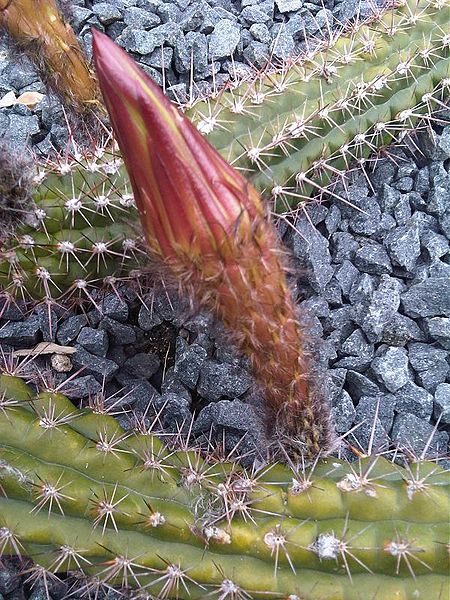
Trichocereus thelegonus is a branchy & creeping cactus that only produces a handful of shoots. It can reach a maximal height of approximately 2.2 meters and can get up to 10 centimeters in diameter. But that´s only the case on very old plants and most of them get 6 – 8 cm in diameter. The plant has 12-13 ribs and is characterized by its very dominant areoles that sit in top of some extremely hexagonal warts. It´s look is very typical and once you got used to the plant, it´s very hard to overlook or misidentify it.
Trichocerus thelegonus has rounded areoles and yellow to dark/brown spines. There also are regional types that rather have a reddish spine color instead of the brown one. Old growth tends to change its color to a more blackish tone, similar to how it can be observed on Trichocereus cuzcoensis. That said, both are really not very similar and this interesting plant from Argentina rather resembles a hanging basket cactus, than a classic columnar. Tr. thelegonus / Echinopsis thelegona usually has one and, in some very rare cases, two middle spines and between 5-8 radial spines that can reach up to 2,5 centimeters in length.
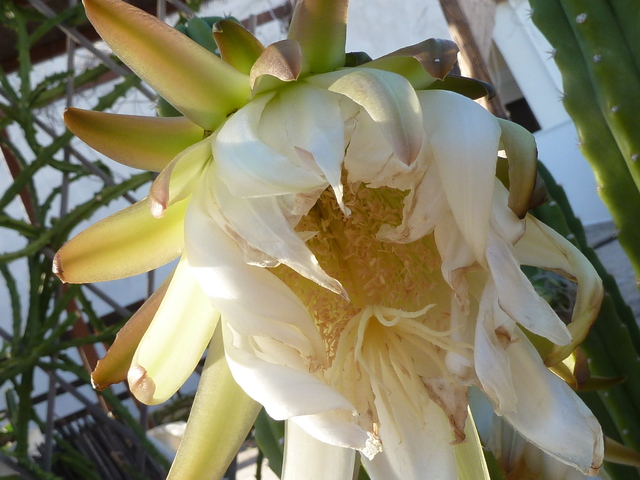
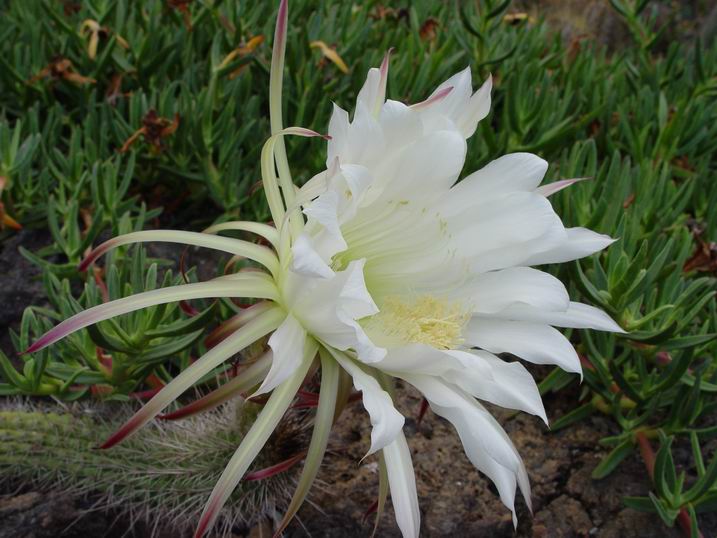
FLOWER: Trichocereus thelegonus is a night flowering species, with flowers than can stay open until the early morning. The flower is white and gets up to 22 centimeters long and I measured a staggering 17 centimeters in diameter.
Apart from the size, the flower is very beautiful and has a wonderful scent!
Fruits: The fruits of Trichocereus thelegonus are round and have reddish brown hairs. The fruits are reddish and can reach 6 centimeters in diameter. It does not produce as many seeds as other plants from the same genus. Trichocereus thelegonus / Echinopsis thelegona is self-sterile and it needs pollen from other plants to produce seed.
Crested or Monstrose type: There also is a crested clone of this plant that is extremely cool and resembles a monstrose Cereus. I´ve been lookingf or this crest for years, but wasn´t able to find one yet. Luckily, there are some pics from a Botanical garden:
Buy seeds or cuttings of Trichocereus thelegonus: This type is kinda rare, but I sometimes get viable seeds of Trichocereus thelegonus. The problem isn´t that there aren´t any seeds available; but most of the ones that were, did not germinate. I am working on putting the type in my shop and if you want to be up to date about my fresh seeds, please subscribe to my newsletter at: trichocereus.net/newsletter.


bernard loison Echinopsis_thelegona

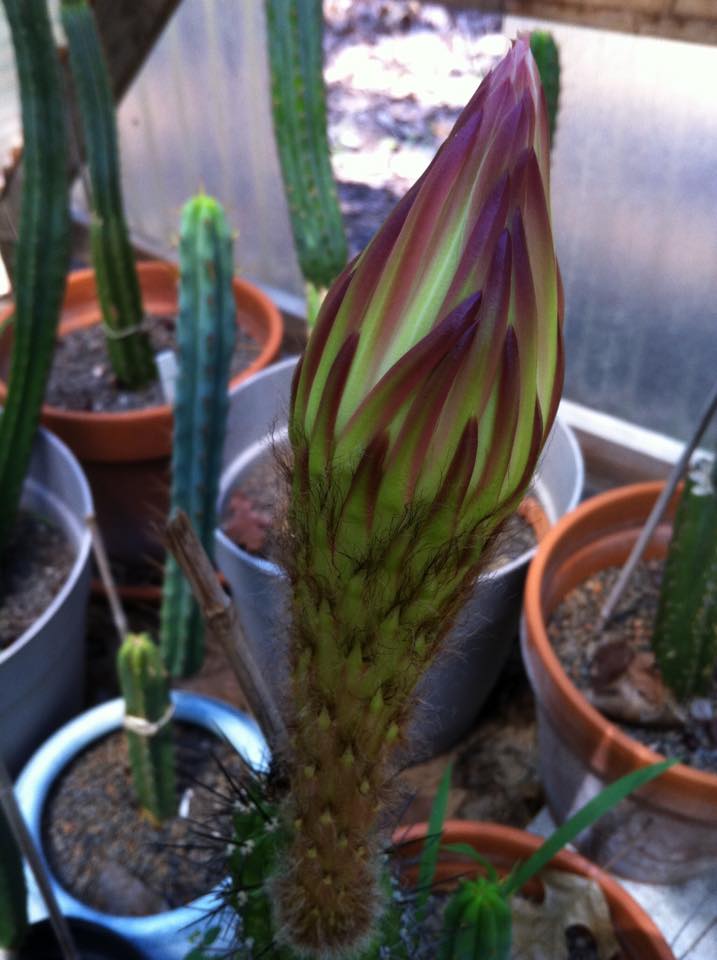

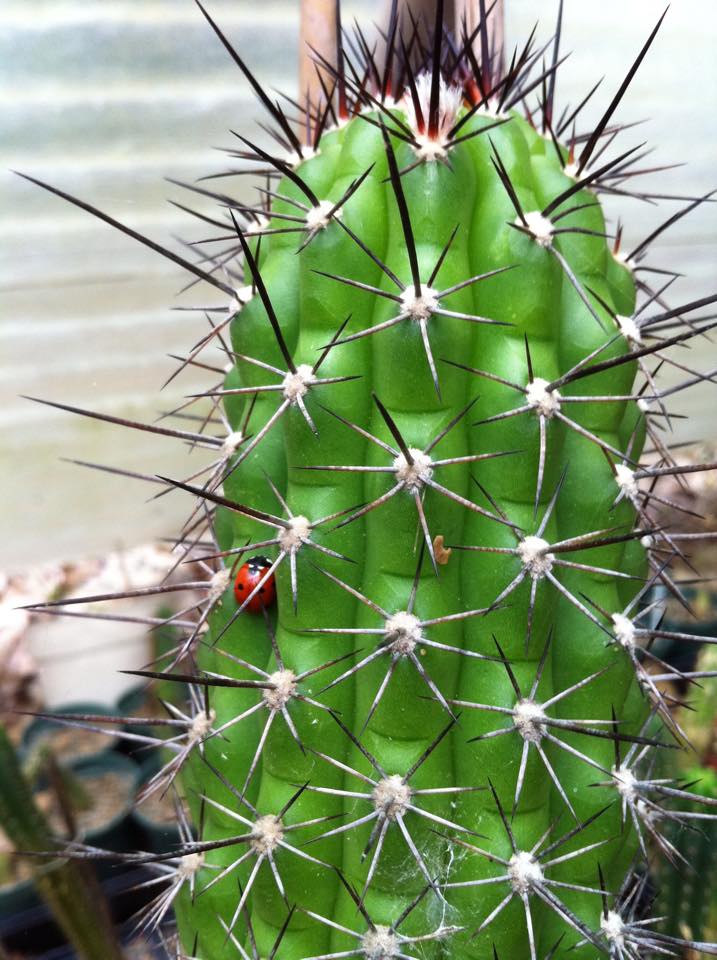
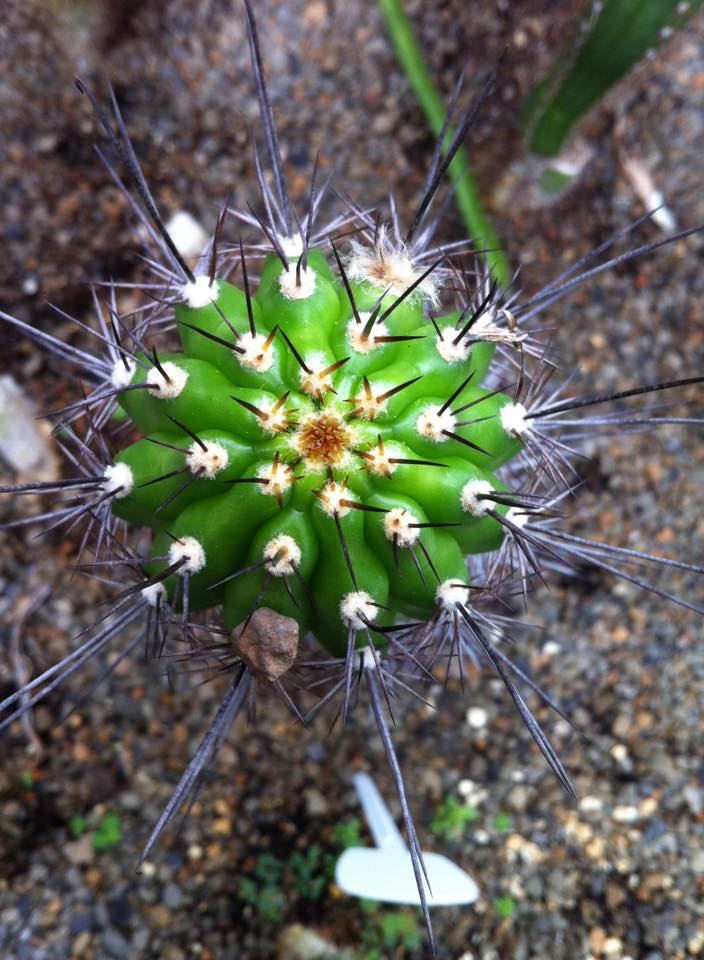
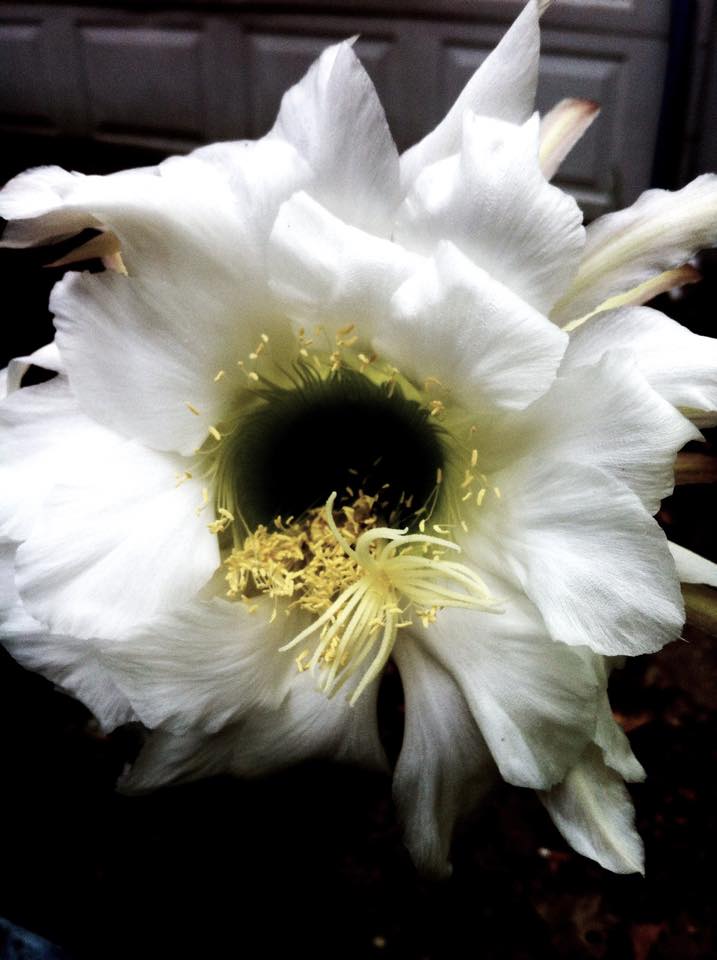
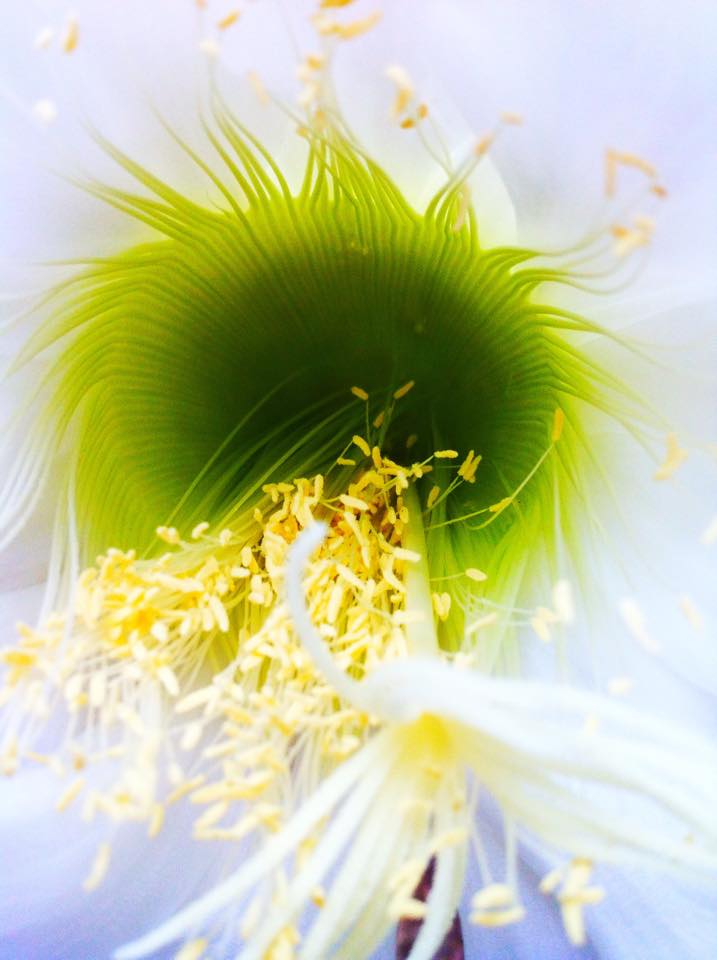
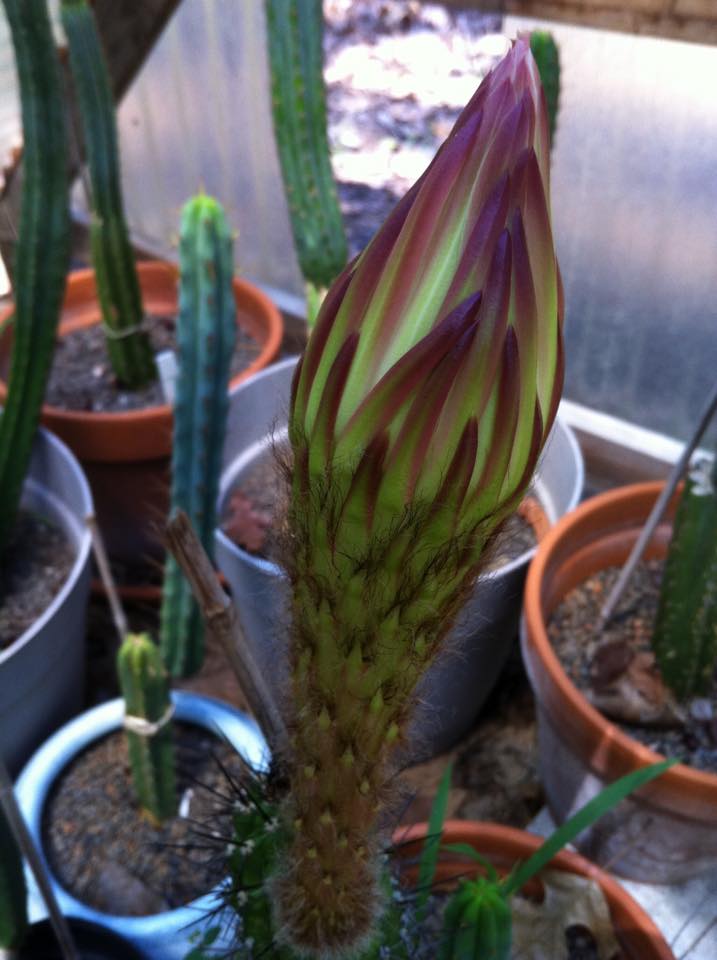
Pics: Noah Reams
Trichocereus thelegonus / Echinopsis thelegona Friedrich & Rowley
Montag, 28. Dezember 2015
YOWIE (Trichocereus Pachanoi)
YOWIE (Trichocereus Pachanoi) – Named Clone Database


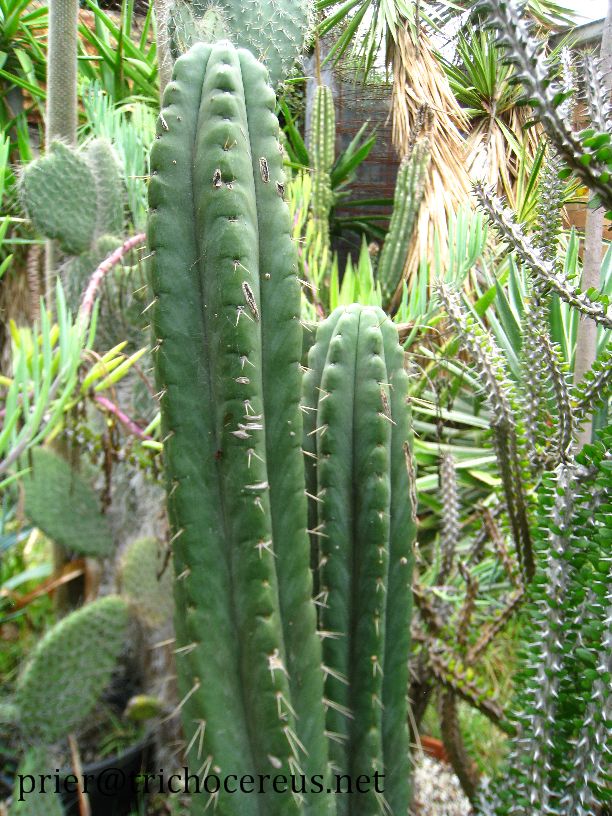
Yowie is a very cool and popular Trichocereus Pachanoi with a unique Spination that consists of two parallel Spines per Areole. It also has very pronounced ribs and looks very much like an Ecuadorian Pachanoi. Now let me add some information about where this clone came from.
The Yowie clone originated in Yarrawonga Victoria. The SAB member Marsha (who was previously known by the username „Yowie“ led PD to the property where the mother plant of this clone grew. This clone is also part of the Fields collection, where many amazing clones came from. The clone is easily recognized by the pair of spines, that makes it very different from other Pachanois. However, similar plants can be found all across Australia (and the world), so it´s not really sure if Yowie is actually a clone or just represents a local type. I know similar (and almost identical) Pachanois, especially from Ecuador and it may be very well possible that they are not genetically identical to the Yowie clone. If you encounter similar plants, you can just test it by trying to breed it with a verified Yowie. If you are not sure about the ID of your plant, feel free to post in on SAB or our Trichocereus Facebook Group!
Where to buy Yowie seeds or plants?: This clone is really rare and only shows up every now and then on sales in the SAB forum or our Facebook group. I am currently not aware of any breeders that actively breed with it though there are some cuttings available every now and then. Those hybrids originated in Australia (which has very strict import and export laws), what makes them very rare throughout other parts of the world. For everyone who owns or is looking for some Yowies, I would recommend making a posting in the group or the SAB forum.


Pic: Prier


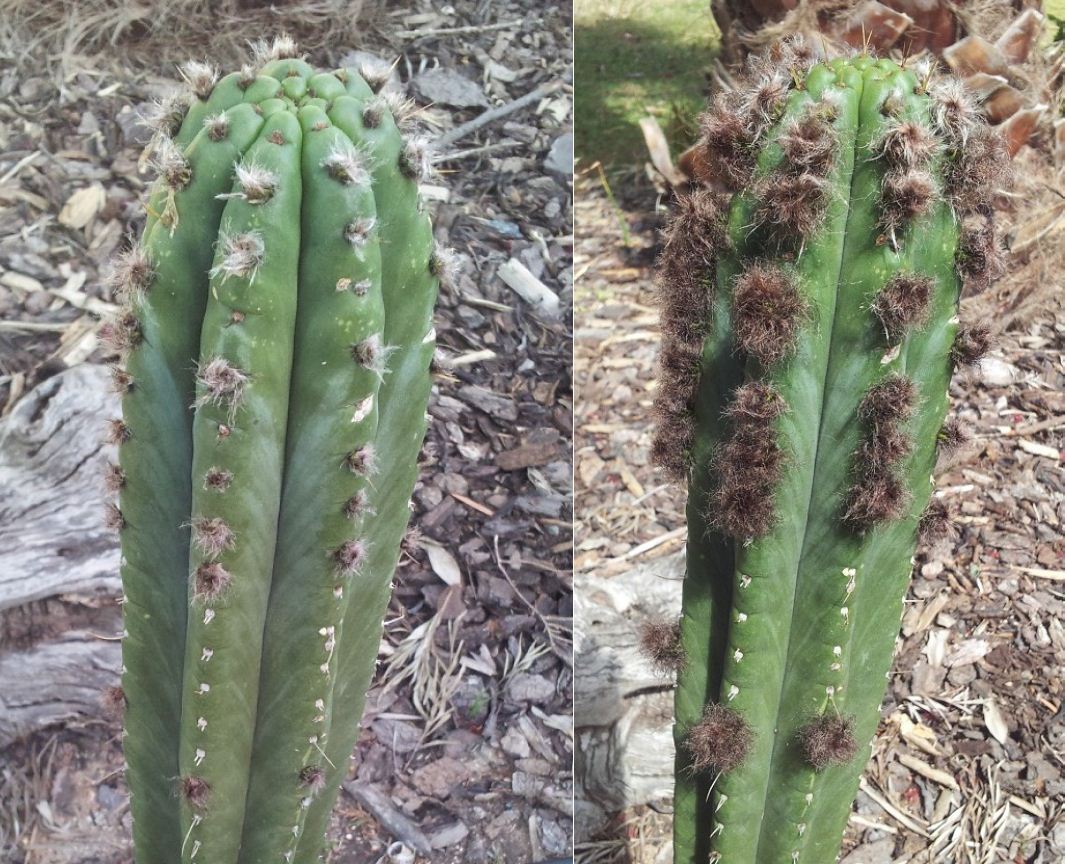
Pic: Gus Freeman
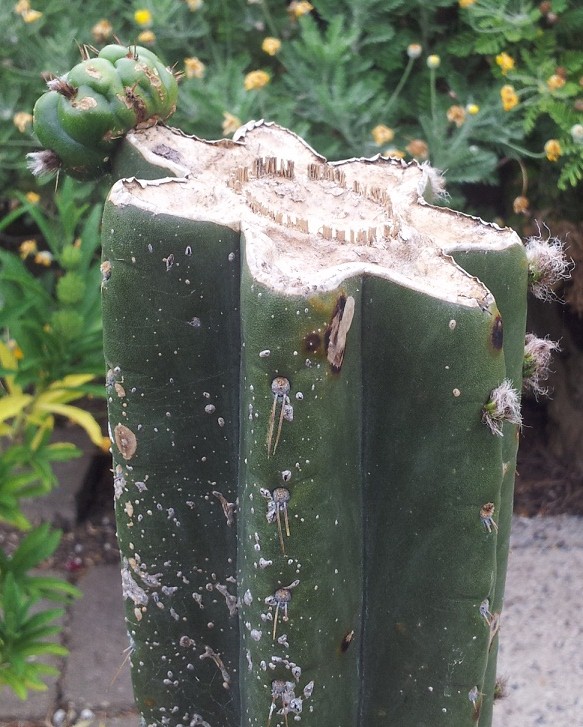
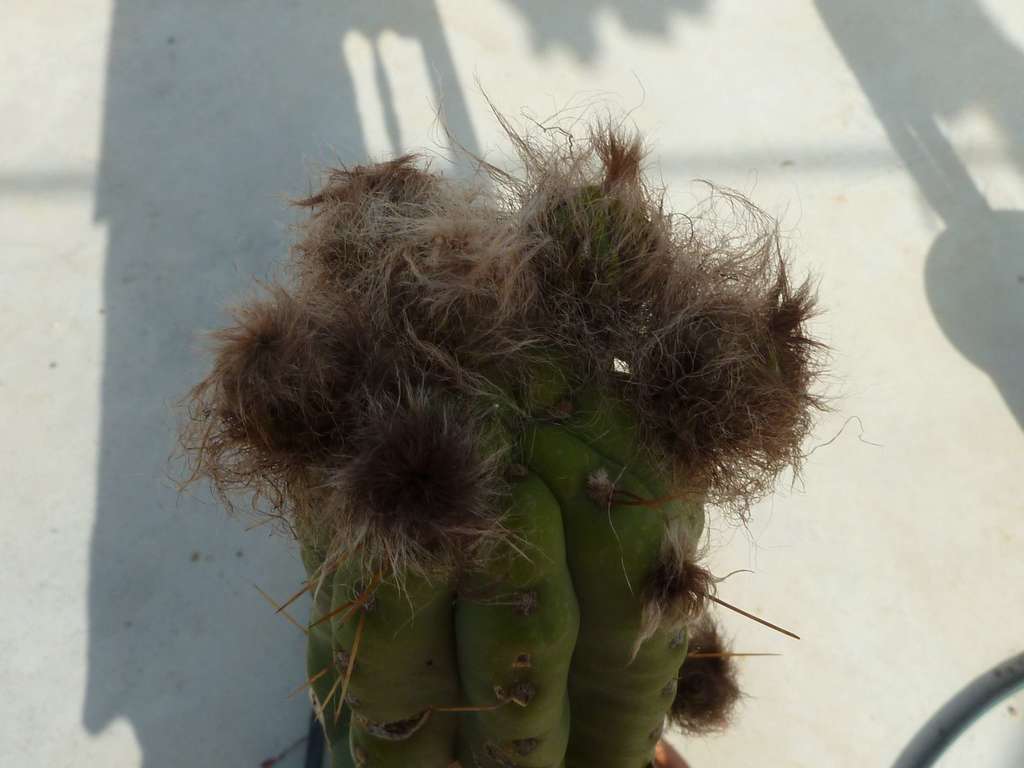
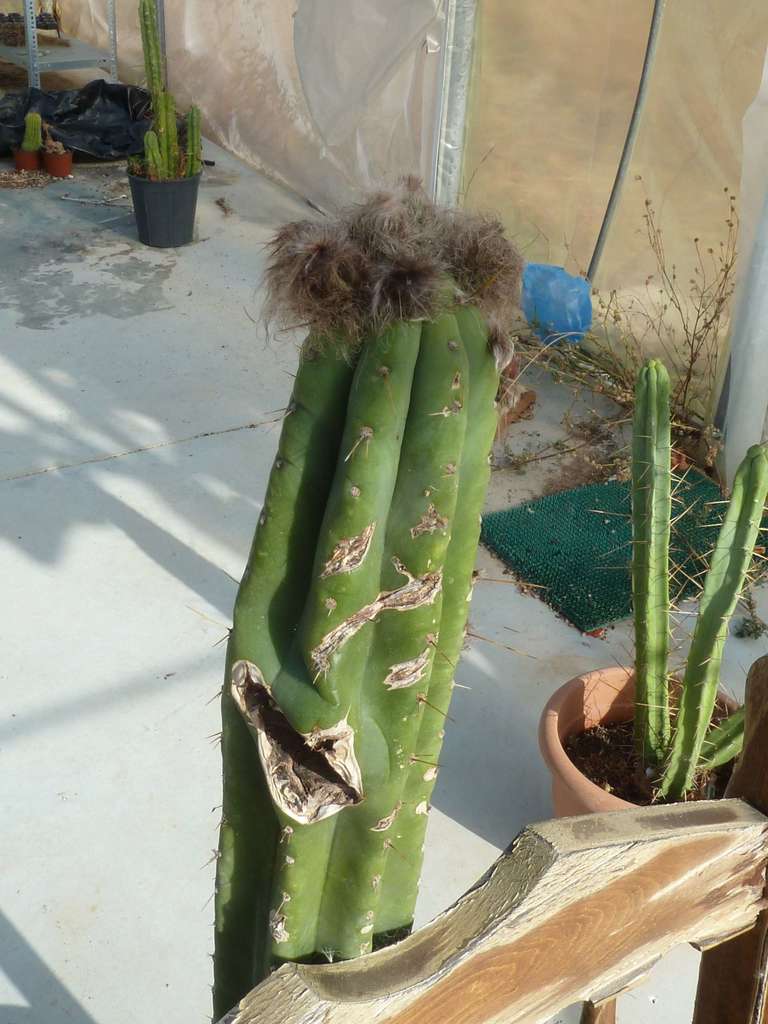
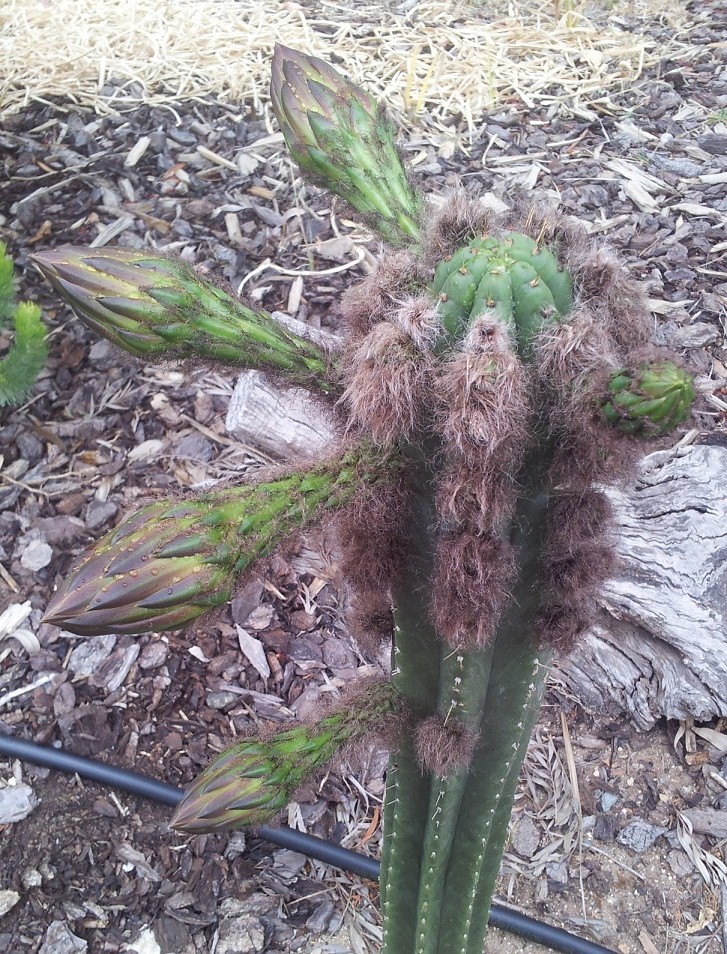
YOWIE Trichocereus Clone Echinopsis pachanoi Trichocereus clone Echinopsis pachanoi
Montag, 1. Juni 2015
YOWIE (Trichocereus Pachanoi)
YOWIE (Trichocereus Pachanoi) – Named Clone Database
Yowie is a very cool and popular Trichocereus Pachanoi with a unique Spination that consists of two parallel Spines per Areole. It also has very pronounced ribs and looks very much like an Ecuadorian Pachanoi. Now let me add some information about where this clone came from.
The Yowie clone originated in Yarrawonga Victoria. The SAB member Marsha (who was previously known by the username “Yowie” led PD to the property where the mother plant of this clone grew. This clone is also part of the Fields collection, where many amazing clones came from. The clone is easily recognized by the pair of spines, that makes it very different from other Pachanois. However, similar plants can be found all across Australia (and the world), so it´s not really sure if Yowie is actually a clone or just represents a local type. I know similar (and almost identical) Pachanois, especially from Ecuador and it may be very well possible that they are not genetically identical to the Yowie clone. If you encounter similar plants, you can just test it by trying to breed it with a verified Yowie. If you are not sure about the ID of your plant, feel free to post in on SAB or our Trichocereus Facebook Group!
Where to buy Yowie seeds or plants?: This clone is really rare and only shows up every now and then on sales in the SAB forum or our Facebook group. I am currently not aware of any breeders that actively breed with it though there are some cuttings available every now and then. Those hybrids originated in Australia (which has very strict import and export laws), what makes them very rare throughout other parts of the world. For everyone who owns or is looking for some Yowies, I would recommend making a posting in the group or the SAB forum.


YOWIE (Trichocereus Pachanoi)
Abonnieren
Posts (Atom)